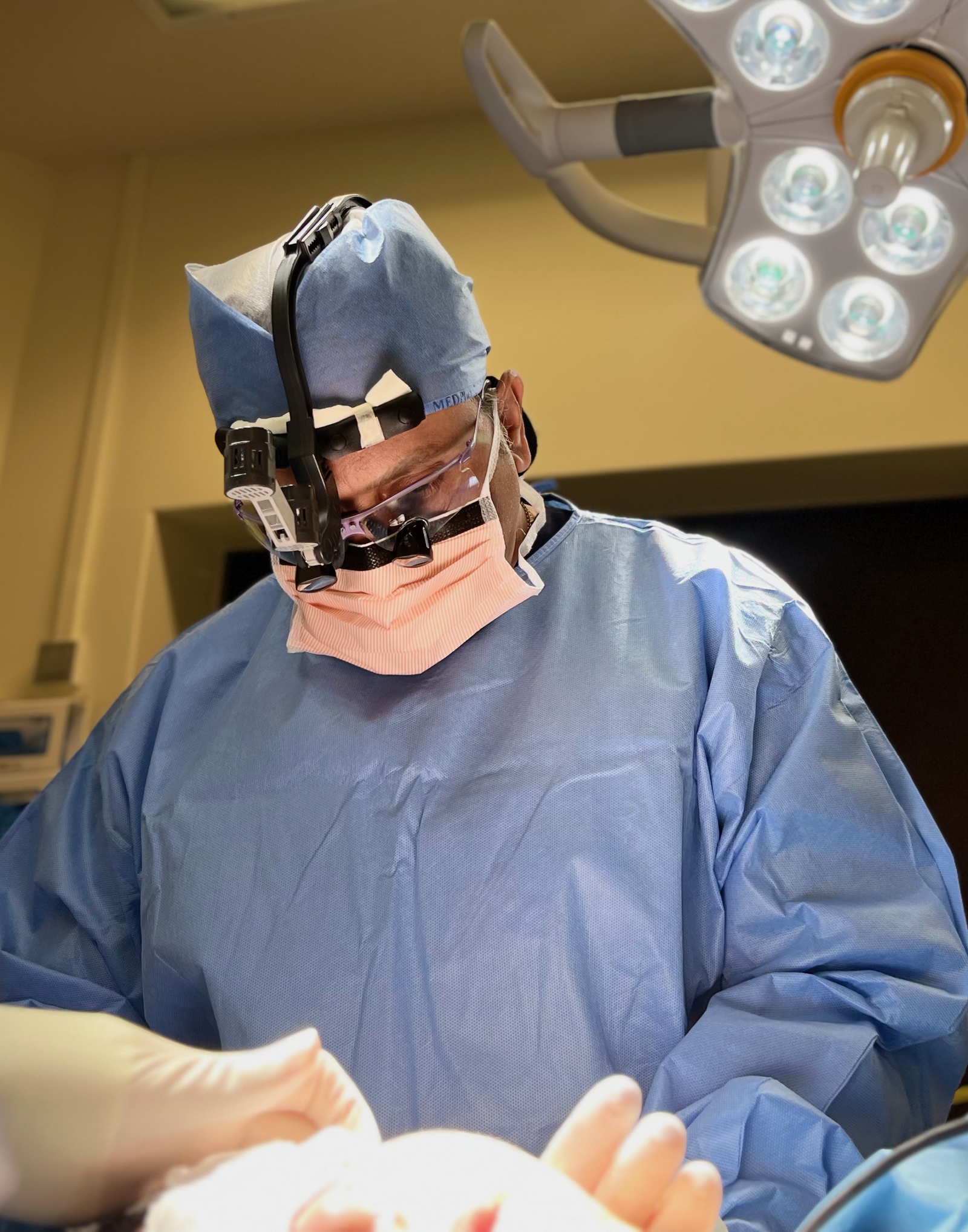
By Dr Sanjay Parashar, MBBS, MS, MCh (Plastic Surgery), DipNB — Consultant Plastic Surgeon, Dubai London Hospital (DHA licence 00244892) · ISAPS National Secretary for the UAE · Performing rhinoplasty since 1993 · Updated November 2026
Quick answer: Most visible swelling and bruising after rhinoplasty settles in the first two to three weeks, so you can usually go back to work and social life within that time. The nose then keeps refining for months. The bridge settles first, and the tip can take up to a year, or longer in thick, oily skin. How quickly you heal depends on your skin, whether the tip was opened, and how carefully the operation is done.
Swelling is the question I am asked most after surgery. Patients see a nose that looks bigger than they expected in the first weeks and worry that something has gone wrong. Usually nothing has. Below is the timeline I give my own patients, why some noses swell more than others, and what I do in theatre to keep swelling down.
How long does swelling last, week by week?
- Days 1 to 3: Swelling and any bruising around the eyes are at their peak. Keep your head raised and rest.
- Day 5: I remove the splint, clean the nose and fit a moldable aluminium splint with tapes. You learn how to take it off and put it back yourself. Patients travelling home can usually fly on day 6 or 7.
- Week 2: Bruising fades. Most patients are back at office work from around day 8, wearing the splint at home, including overnight.
- Weeks 3 to 4: Your nose looks natural to other people, though it still feels stiff and looks fuller to you, especially in the morning.
- Months 1 to 3: The bridge becomes sharper and the swelling between the eyes clears.
- Months 3 to 6: The tip begins to define. The area just above the tip is often the last to settle.
- Months 6 to 12: The final shape appears. In thick, sebaceous skin the tip can keep refining beyond a year.
I review every patient at 1, 3, 6 and 12 months so we can follow this together, and my team is available between visits if you are worried.
Why do some noses swell more than others?
- Your skin. Swelling is less in people with thin skin. Thick, sebaceous (oily) skin holds swelling for longer and hides the shape underneath for more months. Read more about rhinoplasty for thicker, Indian-type noses.
- Open or closed tip. In my experience, swelling is less after a closed tip approach than an open tip approach, because the skin over the tip is not lifted. I still choose the approach your nose needs, not the one that swells least. Read more about tip rhinoplasty.
- How much work is done. Bone work, grafts and revision surgery all add to swelling.
- How carefully the tissues are handled. This is where surgical technique makes the biggest difference.
What do I do in surgery to keep swelling down?
Much of the swelling you will have is decided in the operating theatre. These are the steps I use for every rhinoplasty:
- A special infiltration solution. Before I start, I infiltrate the nose with a solution containing lidocaine, adrenaline and triamcinolone. It reduces bleeding during surgery and calms inflammation afterwards.
- Bloodless dissection. I work in the correct tissue planes so there is very little bleeding. Less blood in the tissues means less swelling and bruising.
- Ultrasonic saws and rasps for the bones. These let me shape the nasal bones through limited dissection. Piezo instruments usually need much more lifting of the soft tissue off the bone (degloving), and more tissue disturbed means more swelling. I use piezo only when the bone is irregular and needs a lot of reshaping.
- Internal wounds left to drain. I do not seal the internal wounds completely, so blood and fluid can drain out instead of collecting under the skin.
- No nasal packing. Packing blocks drainage and increases swelling, and patients find it uncomfortable. I avoid it.
- Extra splinting for thick skin. For thick-skinned patients I recommend 2 to 4 weeks of external splinting: continuously for the first 10 days, then about 12 hours a day.
- Steroid injections when needed. If swelling is slow to settle after surgery, I inject diluted triamcinolone to help it reduce.
What can you do at home to reduce swelling?
- Sleep with your head raised on two pillows for the first week or two.
- Use cool compresses on your cheeks and around your eyes in the first two days, without pressing on the nose.
- Wear your splint exactly as I advise, and do not leave it off early.
- Avoid bending, heavy lifting and strenuous exercise until I tell you it is safe.
- Keep salt and alcohol low, and do not smoke.
- Protect your nose from strong sun while it is still swollen.
When is swelling not normal?
Normal swelling improves day by day and is similar on both sides. Contact my team straight away if you notice swelling that suddenly increases, pain that gets worse instead of better, one-sided swelling, fever, spreading redness, a bad-smelling discharge, or bleeding that does not stop.
Frequently asked questions
How long does swelling last after rhinoplasty?
Most visible swelling and bruising settles in the first two to three weeks. The remaining swelling fades gradually over the following months, and the tip can keep refining for up to a year, or longer if your skin is thick and oily.
When will I see the final result of my rhinoplasty?
You will look presentable to others within a few weeks, but the final shape, especially the tip, is usually seen at around one year. I review every patient at 1, 3, 6 and 12 months to follow this.
Why is my nose tip still swollen three months after surgery?
This is common. The tip and the area just above it (the supratip) are the last parts to settle, particularly after open tip surgery and in people with thick, sebaceous skin.
Is there more swelling after open rhinoplasty than closed rhinoplasty?
In my experience, yes. A closed tip approach usually swells less than an open tip approach, because the skin over the tip is not lifted. The right approach still depends on what your nose needs.
Does thick skin swell more after rhinoplasty?
Yes. Thin skin settles faster. Thick, oily (sebaceous) skin holds swelling longer, so I usually recommend extra splinting for these patients.
When can I go back to work after rhinoplasty?
The splint is removed on day 5, and most patients return to office work from around day 8. Some bruising may still be visible and can usually be covered with make-up.
Can steroid injections reduce swelling after rhinoplasty?
In selected patients I inject diluted triamcinolone, a steroid, after surgery to help stubborn swelling settle. This must only be done by your surgeon, who decides if and when it is appropriate.
Book your consultation
Planning rhinoplasty in Dubai, from Mumbai or anywhere in the UAE? Consultations are at Cocoona, Al Wasl Road, Dubai, with surgery at Dubai London Hospital, Jumeirah. Read more about rhinoplasty recovery, rhinoplasty with Dr Sanjay, what affects the cost of rhinoplasty, or send your photos and questions to our team.
Individual results vary. Your surgical plan is confirmed only after an in-person consultation.