 Written by Dr Sanjay Parashar, Plastic Surgeon, Cocoona Centre for Aesthetic Transformation, Dubai · DHA licence 00244892
A crooked nose — also called a deviated nose — is a nose that leans away from the centre line of the face. It is usually caused by off-centre nasal bones, a bent septum (the wall between the nostrils), or both — often after an old injury. It is corrected with septorhinoplasty, which straightens the bones, septum and cartilage in one operation of about 2–3 hours. Most patients return to desk work in 7–10 days, and the cost in Dubai typically starts from AED 55,000.
What is a crooked nose?
A crooked (or deviated) nose is one where the bridge, the tip, or both do not sit in the midline of the face. Some people notice it only in photos; others have had it since a sports injury or a fall in childhood. It is one of the most common reasons people come to me for rhinoplasty, and one of the most technically demanding to correct.
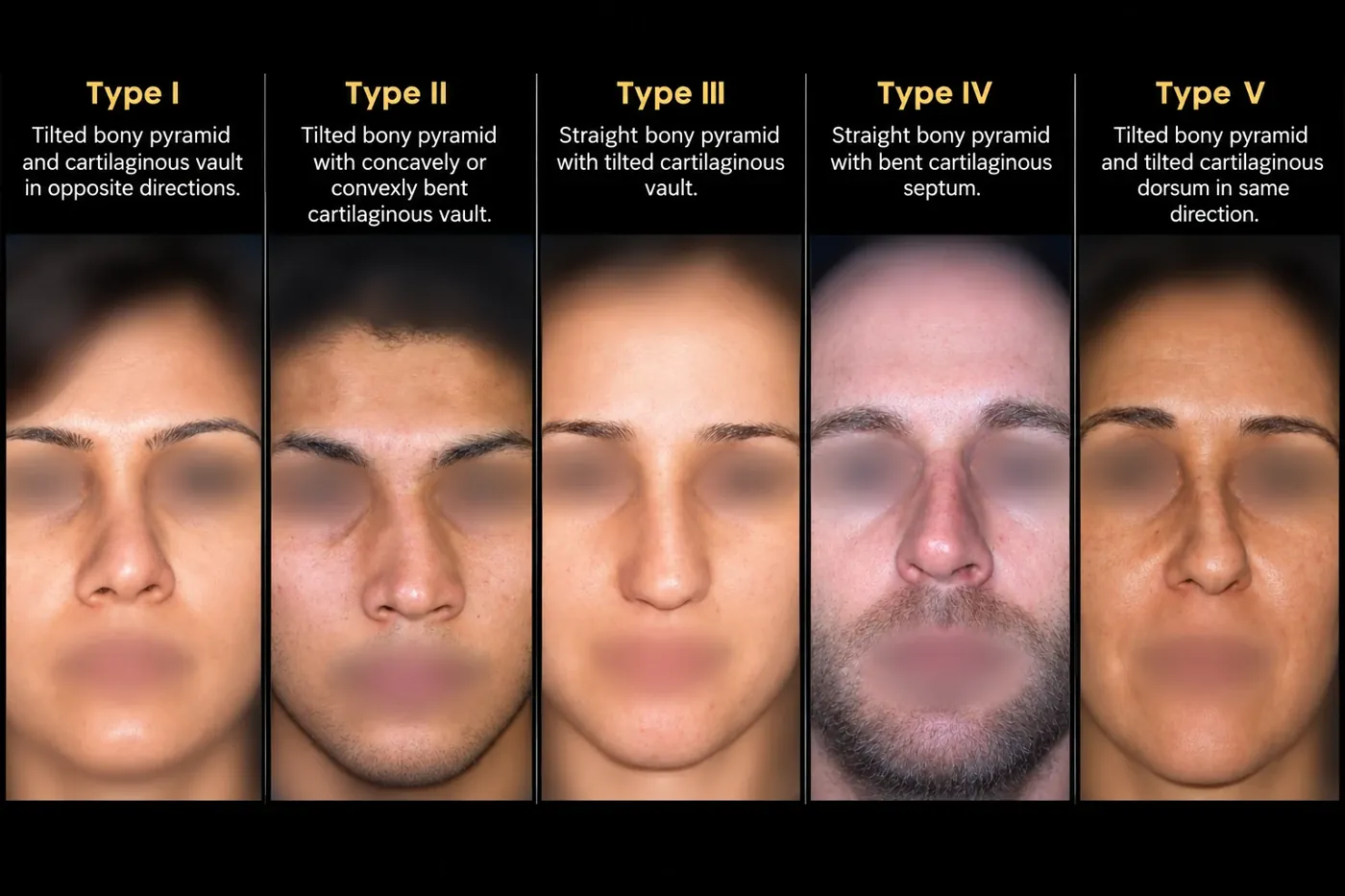
There are four common patterns:
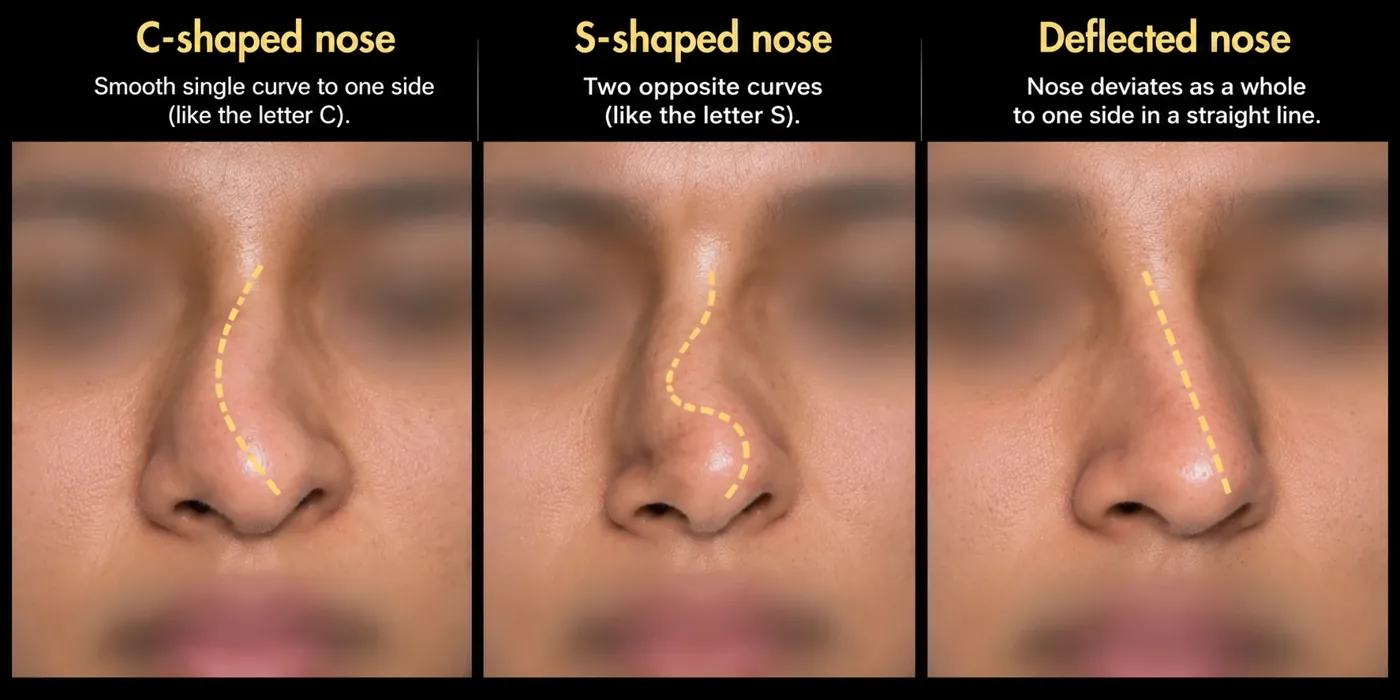
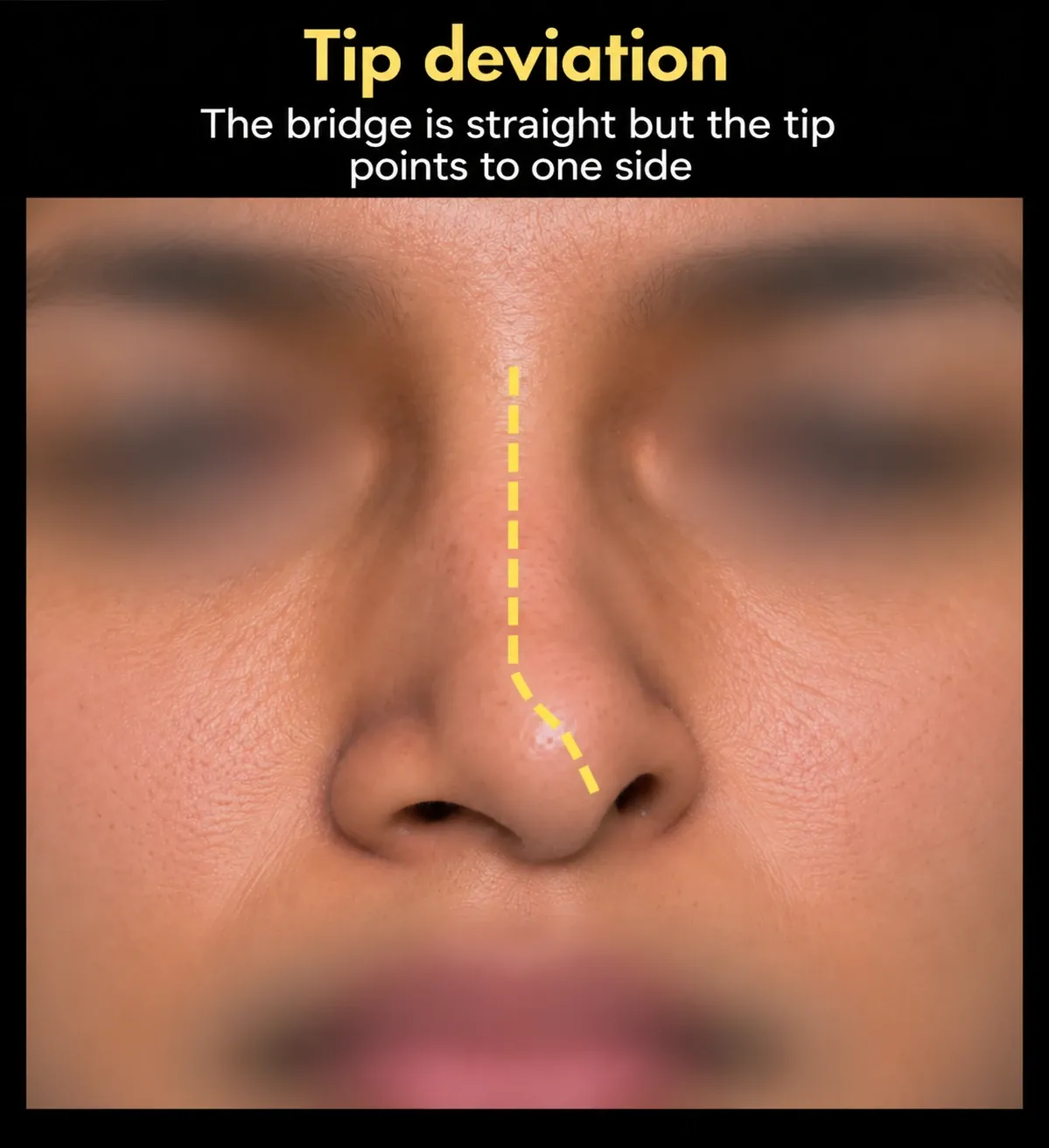
Dr SanjayThe commonest pattern I see in my practice is the S-shaped deviation.
What causes a crooked nose? Your anatomy explained
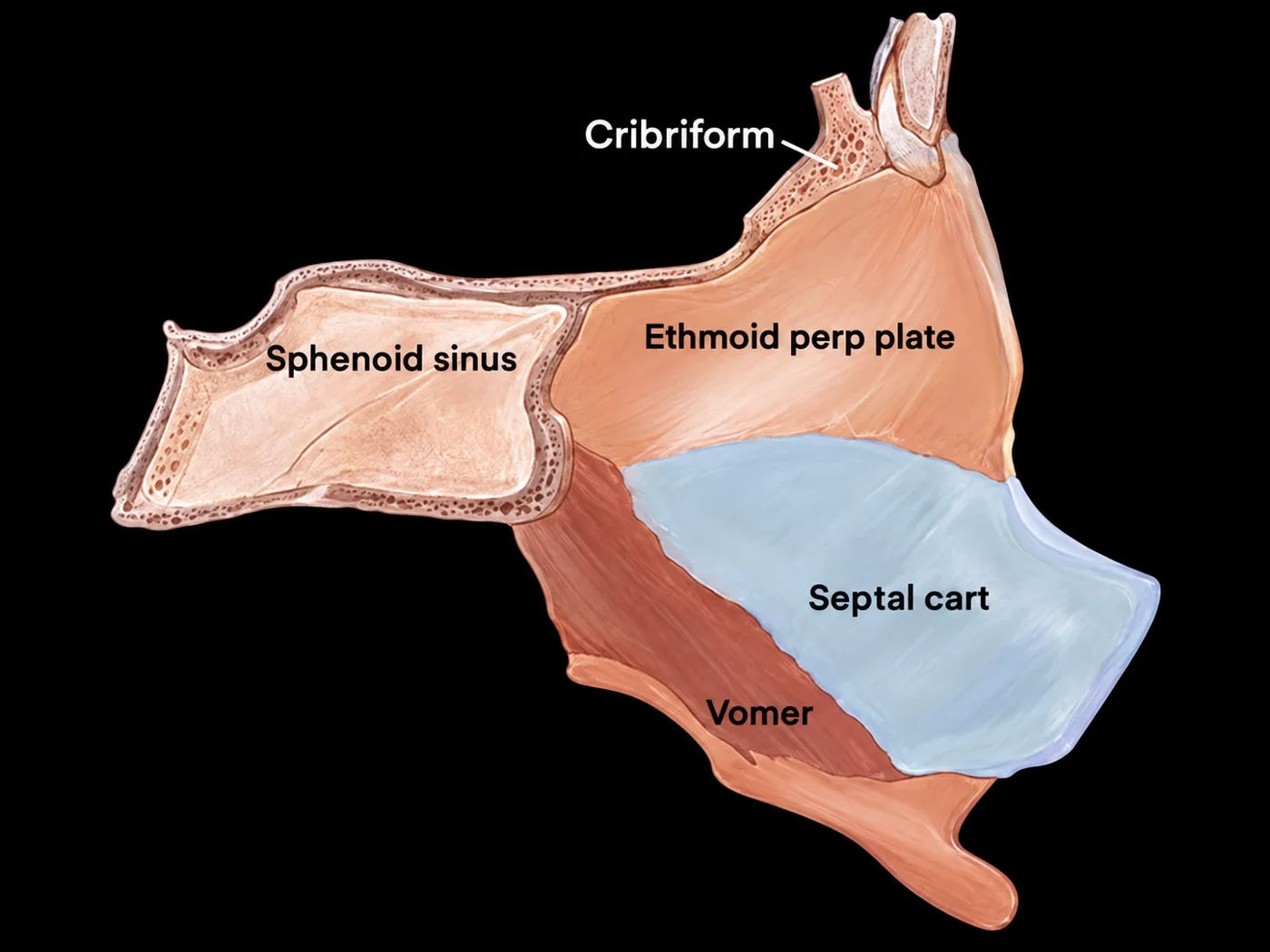
A crooked nose is almost never just a skin-deep problem: the shape you see is set by the bone and cartilage underneath. The upper third of your nose is bone, the lower two-thirds is cartilage, and the septum runs down the middle like a tent pole holding everything up. If any of these is off-centre, the whole nose follows.
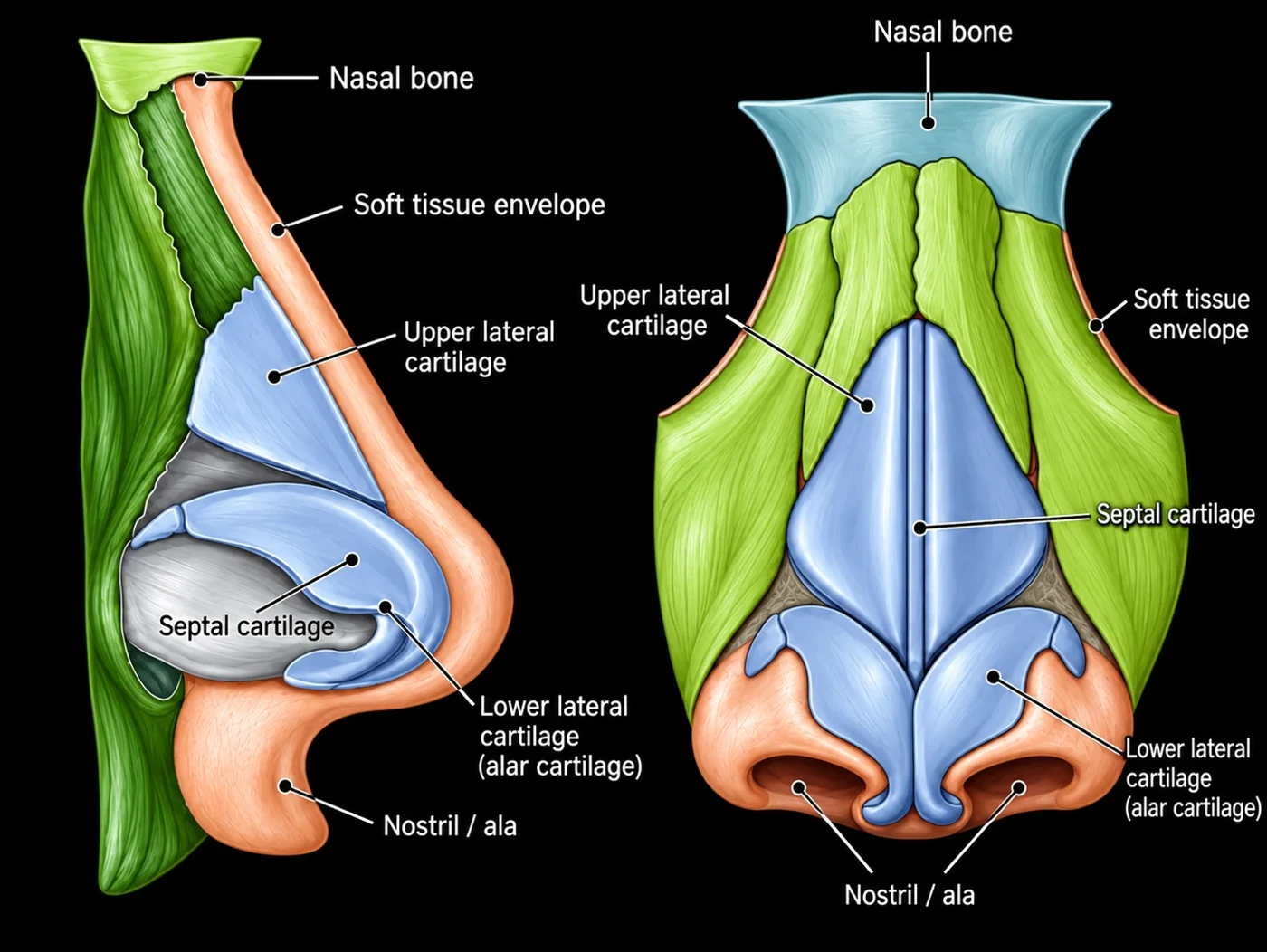
| What you see | What's underneath | What I change |
|---|---|---|
| The bridge leans to one side | Nasal bones set off-centre, often after an old fracture | Controlled bone cuts (osteotomies) to move the bones back to the midline |
| The tip points sideways | The lower end of the septum is bent or has slipped off its base | Straighten and reposition the septum; support it with a cartilage graft if needed |
| One nostril looks narrower | The septum bulges into one side of the airway | Septoplasty to straighten the septum and open that side |
| It looks straight from a distance but twisted up close | Uneven cartilages or uneven skin thickness | Reshape cartilages; use thin camouflage grafts to even out the surface |
Common causes: an injury (sport, fall, accident — sometimes forgotten from childhood), uneven growth during the teenage years, a previous nose operation, or simply the way you were born.
A crooked nose is technically hard to correct because cartilage has a "memory" that tends to bend it back. The key steps to prevent this are to score the cartilage on its concave side and to add a septal extension graft (on one or both sides) to support and buttress the septum in the centre.
Does a crooked nose affect breathing?
Often, yes. Because the septum usually bends with the nose, many people with a crooked nose also have one blocked side, snore, breathe through their mouth at night, or feel congested even without a cold. The narrow area just inside the nostril (the nasal valve) can also collapse when you breathe in.
The advantage of correcting the shape and the airway together is one operation, one recovery and a result that holds. During your consultation I examine the inside of your nose, not just the outside.
I routinely assess breathing clinically and with a CT scan. If there are functional problems in addition to a deviated septum — such as enlarged turbinates, a vomer spur or sinus disease — I work together with an ENT surgeon. ENT work is often partly insurance-eligible.
Is my nose crooked? A quick self-check
Stand in front of a mirror in even light, or take a straight-on photo at arm's length. Your nose may be crooked if:
- An imaginary line from between your eyebrows to the centre of your upper lip does not run straight down your nose
- The tip points slightly left or right
- One side of the bridge looks flatter or longer than the other
- One nostril is visibly smaller or a different shape
- You breathe more easily through one side
- You had a nose injury, even years ago
Send us three photos — front, left side and right side — on WhatsApp for an initial opinion from Dr Sanjay.
Send 3 photos on WhatsApp+971 50 919 8203 · photos are seen only by the clinic teamWhat are my treatment options?
The right option depends on whether the problem is in the bone, the septum, the cartilage, or only the surface.
| Option | What it fixes | What it can't do | Recovery | How long it lasts |
|---|---|---|---|---|
| Septorhinoplasty | Straightens bones, septum and cartilage; can also refine hump, tip and width; improves breathing | Cannot make the nose perfectly symmetrical — no face is perfectly symmetrical | 7–10 days social; 12 months final | Permanent |
| Septoplasty alone | Straightens the septum inside to improve breathing | Does not change the outside shape | 3–7 days | Permanent |
| Revision rhinoplasty | Corrects a nose that is still or newly crooked after previous surgery | Often needs cartilage grafts (septum, ear or rib); more complex | 10–14 days social; 12–18 months final | Permanent |
| Filler camouflage (non-surgical) | Hides a mild deviation by filling the flatter side | Does not straighten the nose or help breathing; not suitable for tip deviation | Same day | Variable, depending on the filler material |
Dr SanjayI do not recommend filler when there is severe deviation or asymmetry together with airway problems. In my view, fillers are useful for minor adjustments only.
How is crooked nose surgery done?
Crooked nose correction is done under general anaesthesia and usually takes 2–3 hours. Here is what happens, step by step:
- Planning: photographs and imaging to map exactly where the deviation starts — bone, septum or tip.
- Approach: open (a small incision across the skin between the nostrils) or closed (all incisions inside). For most crooked noses I use the open approach, as it lets me identify every problem and correct it with maximum accuracy.
- Septum first: the bent part of the septum is straightened or replaced. A straight septum is the foundation — if it stays crooked, the nose drifts back.
- Bones: controlled bone cuts (osteotomies) move the nasal bones to the midline. I mostly use an ultrasonic (Bien-Air) device, and a piezo device in some cases.
- Cartilage and grafts: spreader grafts or septal extension grafts hold the new position and keep the airway open.
- Fine tuning: hump reduction, tip refinement or nostril reshaping if planned.
- Finish: dissolvable stitches and an external splint for about a week. I often place small internal nasal splints with a central hole that lets you breathe. Very rarely I pack the nose.
Dr SanjayFor the bone work I mostly use an ultrasonic device (Bien-Air), and a piezo device in some cases. Ultrasonic instruments cut bone precisely while sparing the soft tissue around it, which gives me fine control when moving the nasal bones back to the midline.
Hospital stay: one night at Dubai London Hospital, an accredited hospital in Dubai.
Does it differ by ethnicity or gender?
Yes. In Dubai I treat noses from many backgrounds, and the aim is always a straight nose that still looks like your nose.
- Arab and Persian noses: often a strong bridge with a hump and a drooping tip; straightening is combined with a careful hump reduction so the profile stays natural.
- South Asian noses: thicker skin and a wider base; the framework must be made stronger so the correction shows through the skin.
- African noses: a lower bridge and wider nostrils; straightening may need extra graft support.
- East Asian noses: a lower bridge; a graft may be needed to build height while straightening.
- European noses: thinner skin, so small irregularities show; precision and smooth contours matter most.
- Men: a straight, strong bridge without over-narrowing or over-rotating the tip.
Dr SanjaySome ethnic qualities should be kept: a small columellar show in patients from the UAE, avoiding a sharp, pinched tip in patients of Asian or Indian origin, and avoiding an over-rotated (upturned) nose in patients of African or Asian origin.
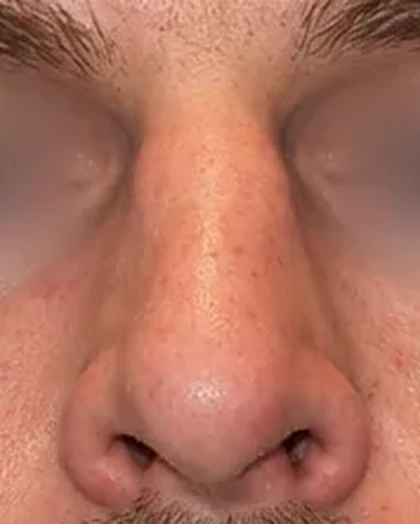
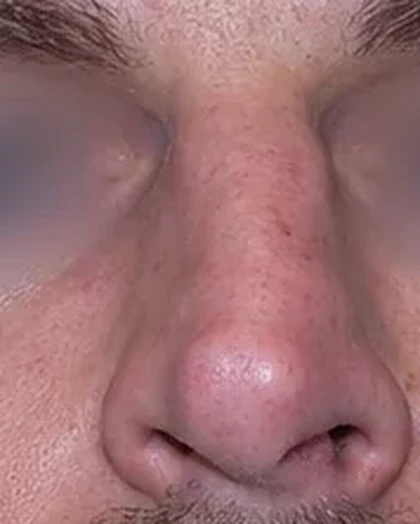
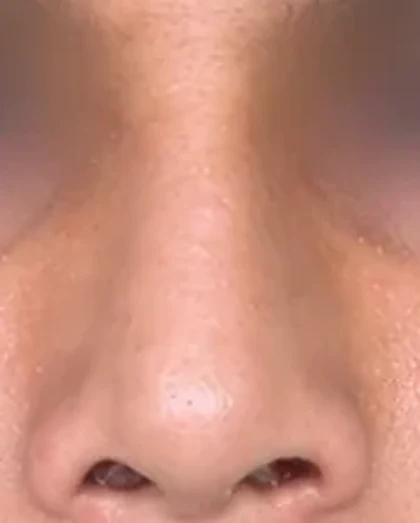
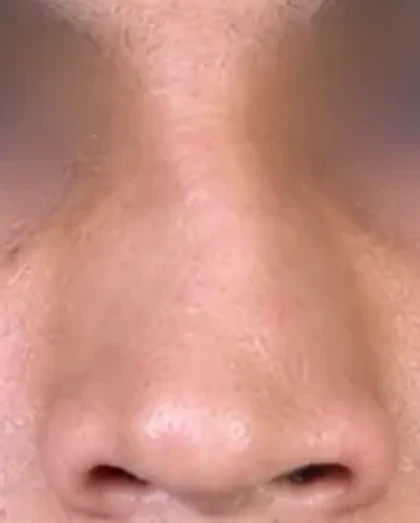
Crooked nose before and after
Real patients of Dr Sanjay, photographed with the same lighting and angle before and 12 months after surgery. Published with written consent. Individual results vary.
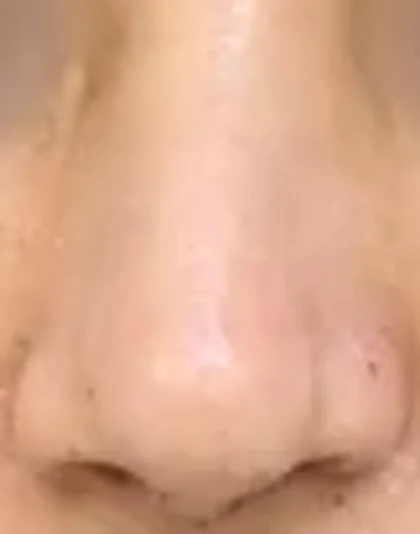
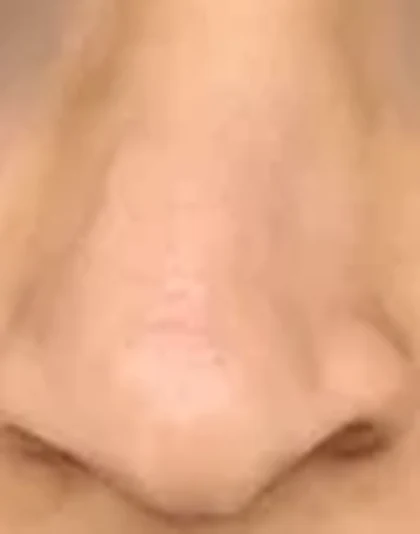
Case 1. Severe deviated nose
Septorhinoplasty · Front, base, side, oblique and downward views
Case 2. Straight deviated (deflected) nose
Septorhinoplasty · Front, side and base views
Case 3. Deviated nasal septum with a crooked nose
Septorhinoplasty · Front, side and base views
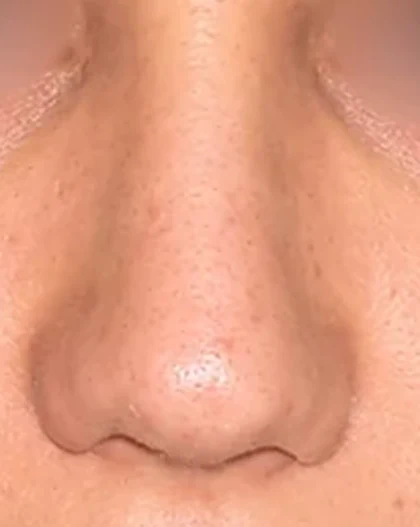
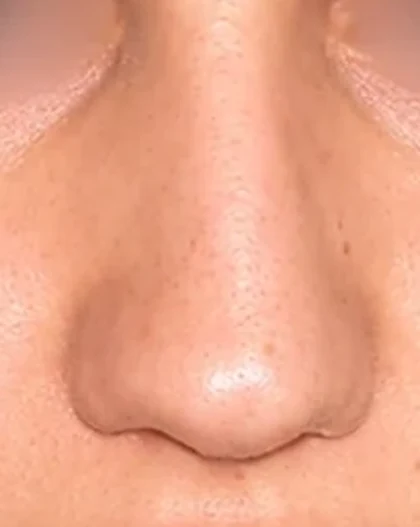
Case 4. Deviated nose tip
Septorhinoplasty · Front view
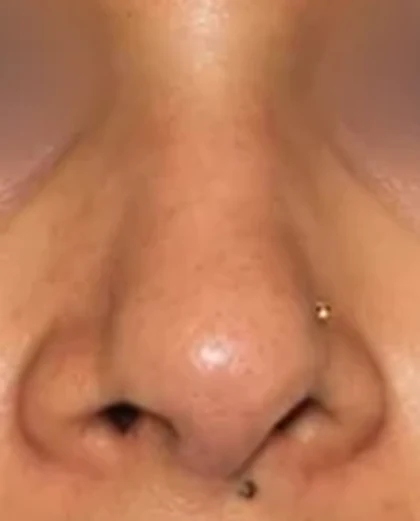
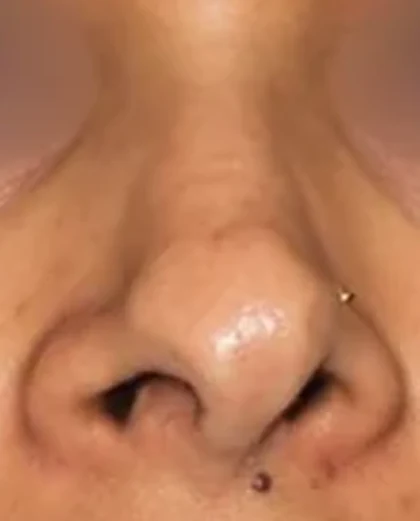
Case 5. Deviated nose with tip asymmetry
Septorhinoplasty · Front and side views
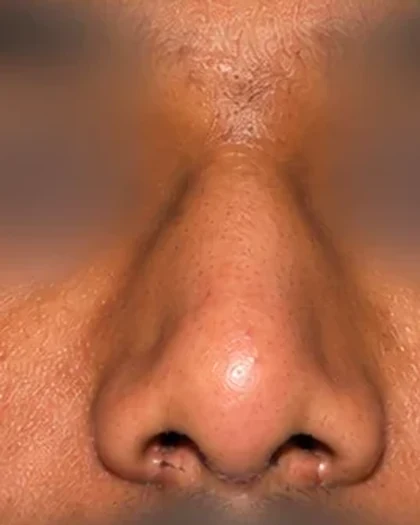
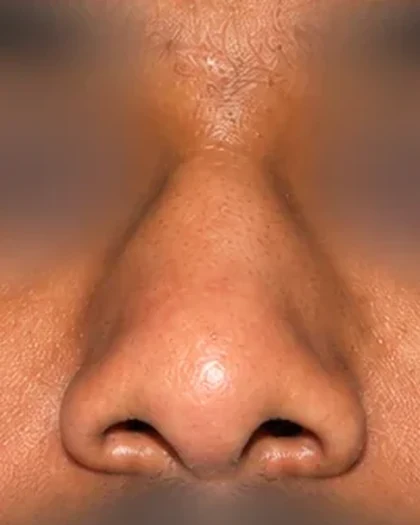
Case 6. Deviated and broad nose
Septorhinoplasty with nostril narrowing · Front and base views
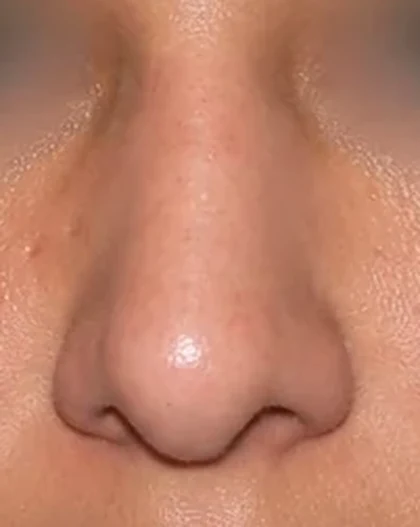
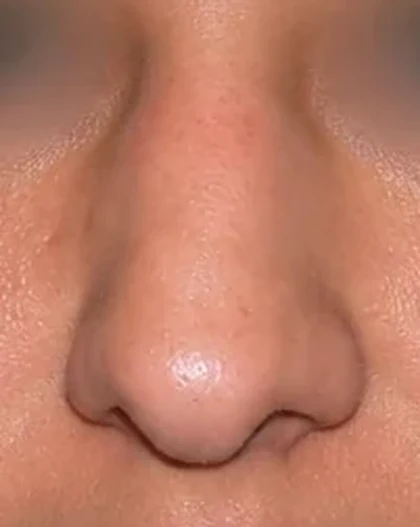
Case 7. Deviated nose
Septorhinoplasty · Front and side views
Front view and "worm's-eye" (base) view show a crooked nose most clearly. See more rhinoplasty results
Recovery: what to expect week by week
Most people are back at a desk job in 7–10 days; the final shape takes about a year to settle. Timings are typical, not guaranteed.
| When | What happens | What you can do |
|---|---|---|
| Day 1 | Nose feels blocked; mild pain controlled with tablets; splint on | Rest with head raised; go home the next day |
| Days 2–5 | Swelling and bruising around the eyes peak, then fade | Short walks; no bending or lifting |
| Day 7 | Splint and any stitches removed | See your nose for the first time; still swollen |
| Days 10–14 | Most bruising gone | Back to work and social life |
| Weeks 3–4 | Swelling keeps falling | Light exercise |
| Week 6 | Bones are stable | Gym, swimming, glasses resting on the nose |
| Month 3 | About 80% of swelling gone | Nose looks natural to others |
| Month 12 | Tip swelling fully settled | Final result; review photos |
Specific to crooked nose correction:
- Follow-up at monthly intervals checks that the septum and bones stay central while swelling settles
- Slight drift can appear in the first months as cartilage settles — it is monitored and usually managed without surgery
Dubai-specific tips: avoid direct sun and the beach for 4–5 weeks, use SPF on the nose, and plan around Ramadan fasting and the summer heat. International patients: plan a minimum stay of 7–8 days in Dubai before flying home.
Risks, and how I reduce them
Every operation carries risk; a crooked nose has one specific risk — some deviation returning — and I plan for it from the start.
| Risk | What it means | How it is reduced |
|---|---|---|
| Residual or returning deviation | The nose is straighter but not perfectly straight, or drifts slightly over months | Straighten the septum first; support with grafts; follow-up at monthly intervals |
| Need for revision | A second, usually smaller, operation | Realistic planning; my revision rate for crooked noses is less than 0.08% |
| Breathing changes | Rarely, breathing feels worse | Assess the airway before surgery; spreader grafts keep the valves open |
| Bleeding or infection | Uncommon; usually minor | Stop blood-thinning medicines and supplements before surgery; sterile, accredited theatre |
| Septal perforation | A small hole in the septum | Careful technique; rare |
| Prolonged swelling | Especially with thick skin | Taping and steroid injections |
| Numbness, scarring, asymmetry | Temporary tip numbness; a fine scar with the open approach; minor asymmetry | Explained at consultation |
| Anaesthesia risks | Rare in healthy patients | Pre-operative tests; certified anaesthetist |
My safety protocol covers pre-operative work-up and intra-operative bleeding control, which supports a safe and early recovery.
How much does crooked nose surgery cost in Dubai?
At Cocoona, crooked nose correction costs from AED 55,000, depending on how complex the deviation is and whether it is a first or revision operation.
What's included: surgeon's fee, anaesthesia, operating theatre, overnight stay, splint, medicines, and follow-up visits for 12 months.
What changes the price:
- Primary vs revision surgery
- Whether grafts are needed, and from where (septum, ear or rib)
- Combined breathing surgery (septoplasty, turbinates)
- Combined procedures (e.g. chin)
For context, rhinoplasty in Dubai generally ranges from about AED 15,000 to AED 65,000. Payment options are available on request.
Why choose Dr Sanjay Parashar in Dubai?
- Crooked noses corrected septum-first, with cartilage scoring and septal extension grafts to stop the bend returning
- Ultrasonic (Bien-Air) and piezo bone work for precise, controlled osteotomies
- 3,000+ rhinoplasties within more than 40,000 aesthetic procedures
- Practising in Dubai since 2005 — founder of Cocoona Centre for Aesthetic Transformation (Dubai 2009, New Delhi 2013)
- ISAPS National Secretary for the UAE (International Society of Aesthetic Plastic Surgery)
- Safety first: surgery grounded in anatomy and surgical fundamentals to confirm: JCI accreditation + DHA-licensed facility wording
- Experience with many nose types: Arab, Persian, South Asian, African, East Asian and European
- Published papers, conference presentations and surgical workshops
- Languages: English, Hindi; Arabic via coordinator
Video (60–90 s): Dr Sanjay explains a crooked nose using the decoder diagram.
Video coming soonto confirm: video to be recordedDr SanjayI always tell my patients that I will aim to improve both the shape and the function of their nose as much as possible — but minor asymmetries may remain.
Frequently asked questions
Will my nose be perfectly straight after surgery?
Can a crooked nose come back after surgery?
Can fillers fix a crooked nose?
My nose was broken years ago. Can it still be fixed?
Will surgery also improve my breathing?
Will there be visible scars?
How painful is it, and when can I go back to work?
When can I fly home after surgery?
What is the right age for crooked nose surgery?
How do I prepare for my consultation?
Related nose problems
Book your crooked nose consultation
Every crooked nose is different. At your consultation Dr Sanjay examines the outside and inside of your nose, explains what is causing the deviation, and gives you a clear plan, cost and recovery timeline.
Cocoona Clinic · Lucia Clinic · Dubai London Hospital
References
- East C. Preservation Rhinoplasty and the Crooked Nose. Facial Plast Surg Clin North Am. 2021;29(1):123–130. doi:10.1016/j.fsc.2020.09.007
- Toriumi DM. Video discussion of: Jasso-Ramírez E, et al. Twisted Nose: Preservation Rhinoplasty with Modified Push-Down/Let-Down Technique. Plast Reconstr Surg. 2023;151(4):749–757. journals.lww.com/plasreconsurg/pages/video.aspx?v=2511
- Parashar S, Venkataram A. Structured Analysis of Nose to Achieve Natural Results in Rhinoplasty. Otolaryngology (Sunnyvale). 2017;7(1):293. doi:10.4172/2161-119X.1000293