 Draft for Dr Sanjay Parashar, Consultant Plastic Surgeon, Cocoona Centre for Aesthetic Transformation, Dubai · DHA licence 00244892
Many people who want a nose reshaped also struggle to breathe through it. The usual causes are a deviated septum, enlarged turbinates and weak nasal valves that collapse when you breathe in. Septorhinoplasty corrects the airway and the shape in one operation, under one anaesthetic, with one recovery. Dr Sanjay assesses breathing clinically and with a CT scan, and works with an ENT surgeon when sinus or turbinate treatment is needed. The functional part is often partly covered by insurance.
Why does my nose feel blocked?
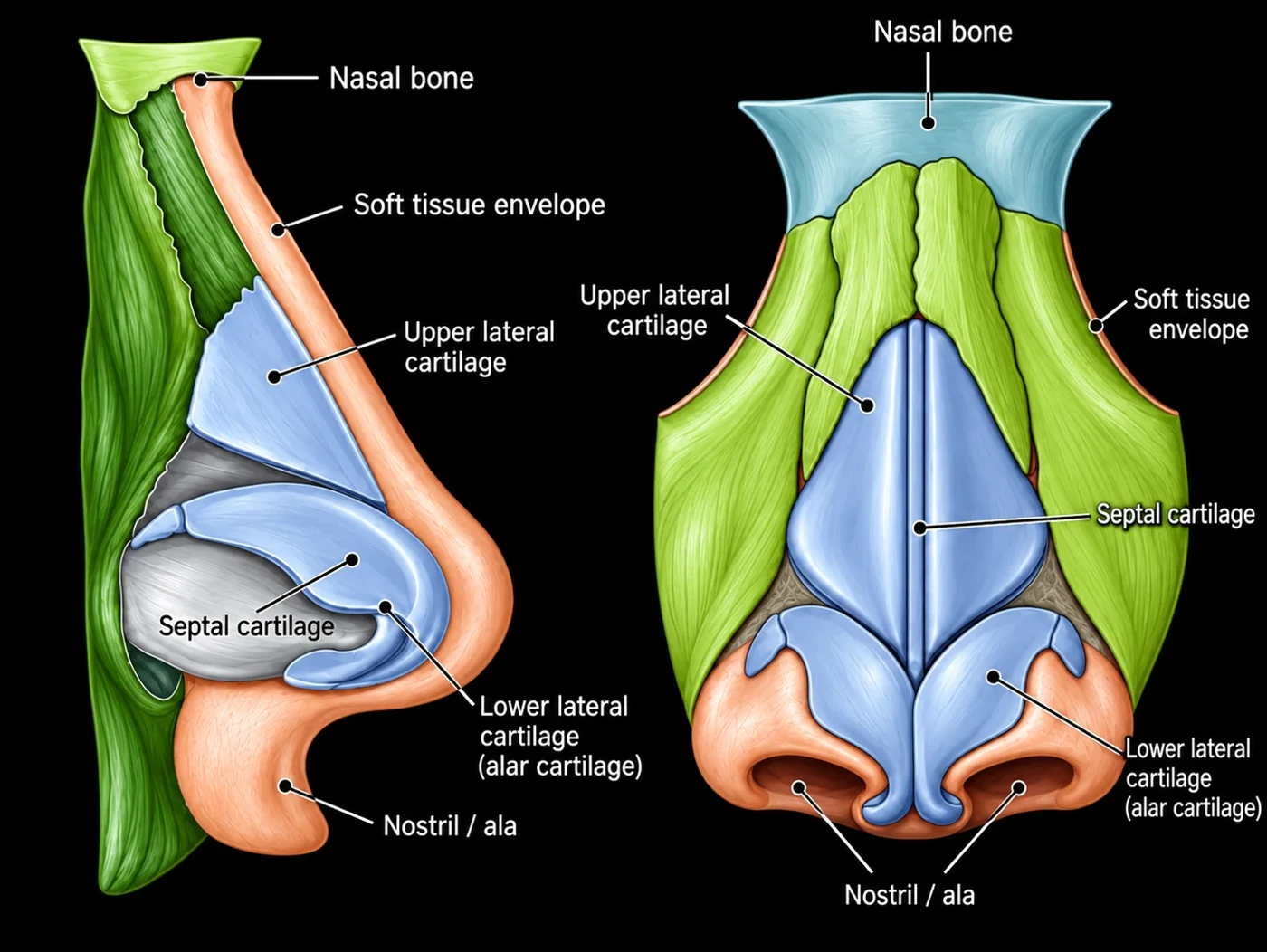
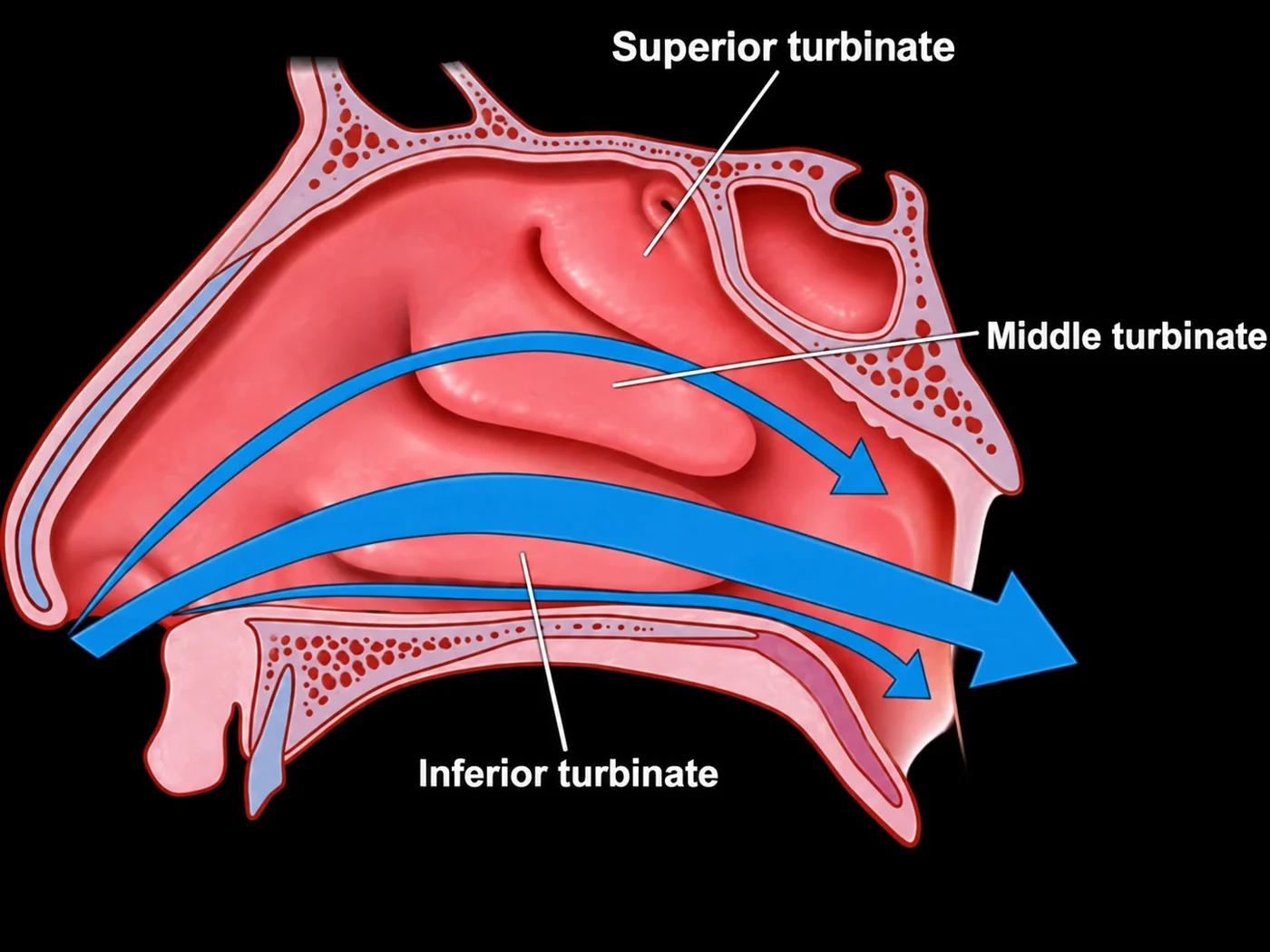
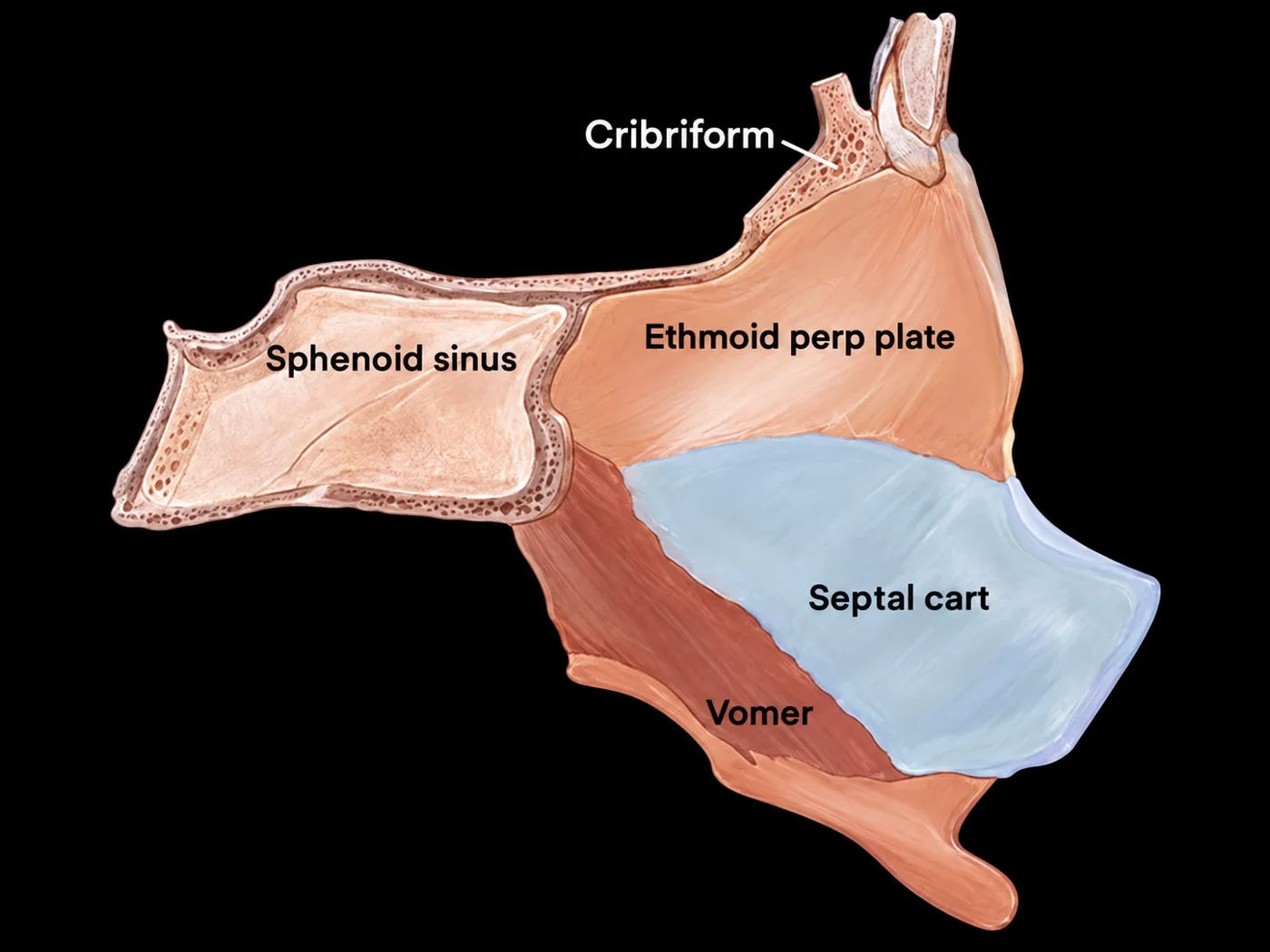
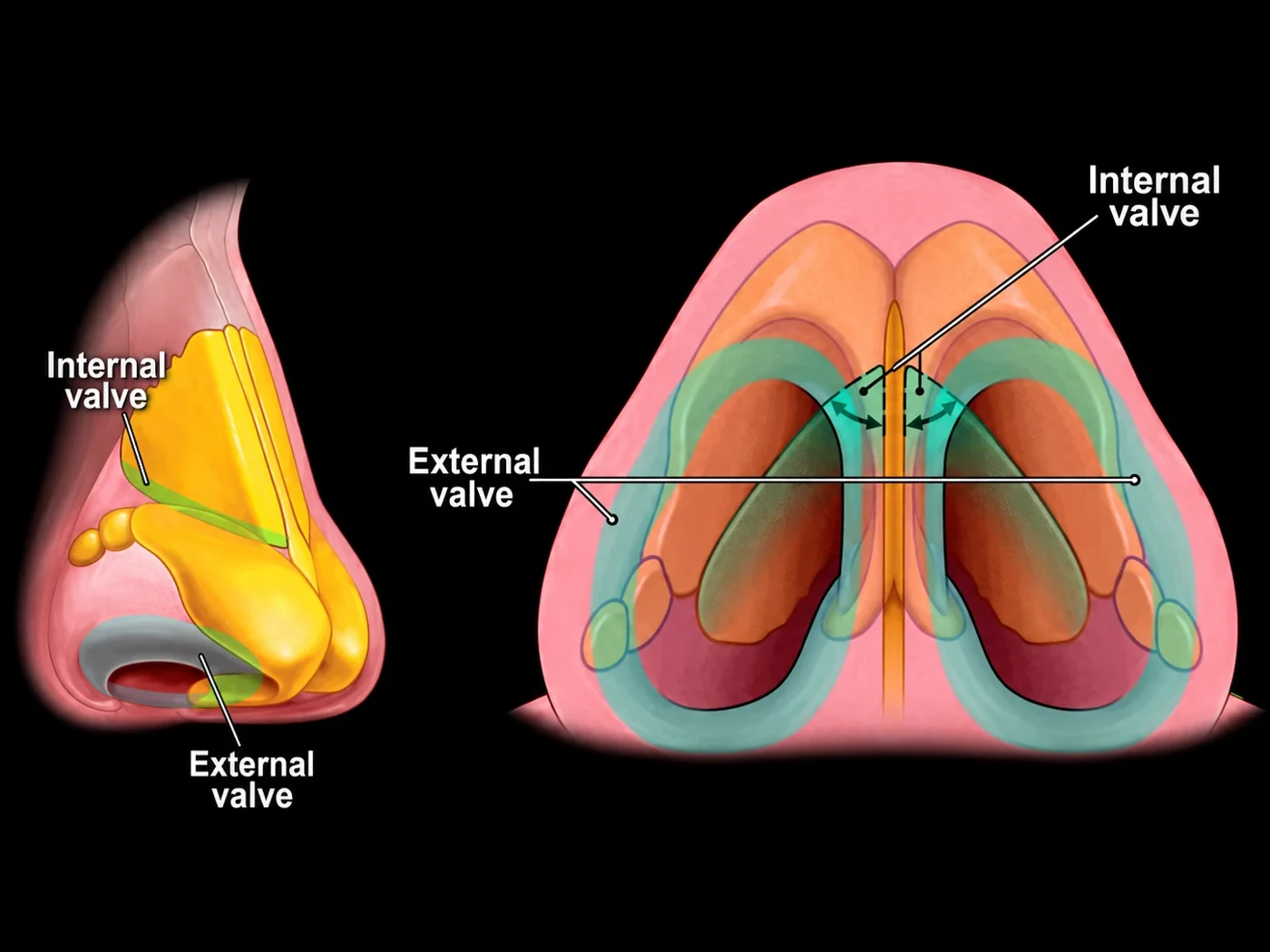
Understanding the anatomy
| What you feel | What's underneath | What changes |
|---|---|---|
| One side always blocked | A deviated septum | Septoplasty — straightening or removing the bent part, keeping an L-shaped support |
| Both sides blocked, worse lying down | Enlarged turbinates | Turbinate reduction, with an ENT surgeon when needed |
| The side of the nose sucks in on a deep breath | Weak nasal valves | Spreader grafts or flaps; lateral crural strut or batten grafts |
| Blockage with a crooked nose | The septum bends with the nose | Straightening the septum and nasal bones together |
Sinus problems and fluid on the CT scan
A CT scan shows the sinuses as well as the septum and turbinates. It can reveal fluid in the sinuses, thickened lining, polyps, or blocked sinus drainage (sinusitis) — all of which cause congestion, facial pressure and a blocked feeling that a straight septum alone will not cure. These are treated by an ENT surgeon, with medicines or endoscopic sinus surgery, and sometimes in the same anaesthetic as the septorhinoplasty.
How blocked is my nose? A quick self-check
Surgeons use a short questionnaire, the NOSE scale, to measure how much a blocked nose affects daily life. Ask yourself how much of a problem each of these has been over the past month:
- Nasal congestion or stuffiness
- Nasal blockage or obstruction
- Trouble breathing through your nose
- Trouble sleeping
- Being unable to get enough air through your nose during exercise
Also try this: gently pull your cheek outwards beside the nose on one side (the Cottle test). If breathing on that side becomes much easier, the nasal valve may be part of the problem.
Send us three photos — front, left side and right side — on WhatsApp for an initial opinion from Dr Sanjay.
Send 3 photos on WhatsApp+971 50 919 8203 · photos are seen only by the clinic teamWhat are my treatment options?
| Option | What it fixes | What it can't do | Recovery | How long it lasts |
|---|---|---|---|---|
| Septorhinoplasty | Breathing (septum, valves) and shape (hump, tip, width, deviation) together | Does not treat allergy or sinus disease on its own | 7–10 days social; 12 months final | Permanent |
| Septoplasty alone | A deviated septum, when the outside shape is fine | Does not change the outside of the nose | 3–7 days | Permanent |
| Turbinate reduction | Enlarged turbinates (often combined) | Does not fix a deviated septum or weak valves | A few days | Long-lasting |
| ENT assessment / consultation | Diagnoses sinus disease, fluid, polyps, allergy and turbinate problems; plans medicines or sinus surgery | Does not change the shape of the nose | — | — |
| Medicines (sprays, allergy treatment) | Swollen lining from allergy or rhinitis | Does not correct structural problems | — | While used |
How is septorhinoplasty done?
- Assessment: examination inside the nose, a CT scan, and a record of your symptoms.
- Approach: open or closed, depending on the shape changes planned.
- Septum: the bent parts are straightened or removed, keeping an L-shaped strut for support.
- Valves: spreader grafts or flaps widen the internal valve; strut or batten grafts support weak nostril walls.
- Turbinates: reduced when enlarged, with an ENT surgeon where needed.
- Shape: hump, tip, width or deviation are corrected as planned.
- Finish: internal splints with a breathing channel, and an external splint for about a week. Packing is rarely needed.
Will insurance cover it?
Some UAE insurers cover the functional (breathing) part of septorhinoplasty after an ENT assessment. Cosmetic changes are not covered. The clinic can provide the paperwork for your insurer. Check your policy before surgery.
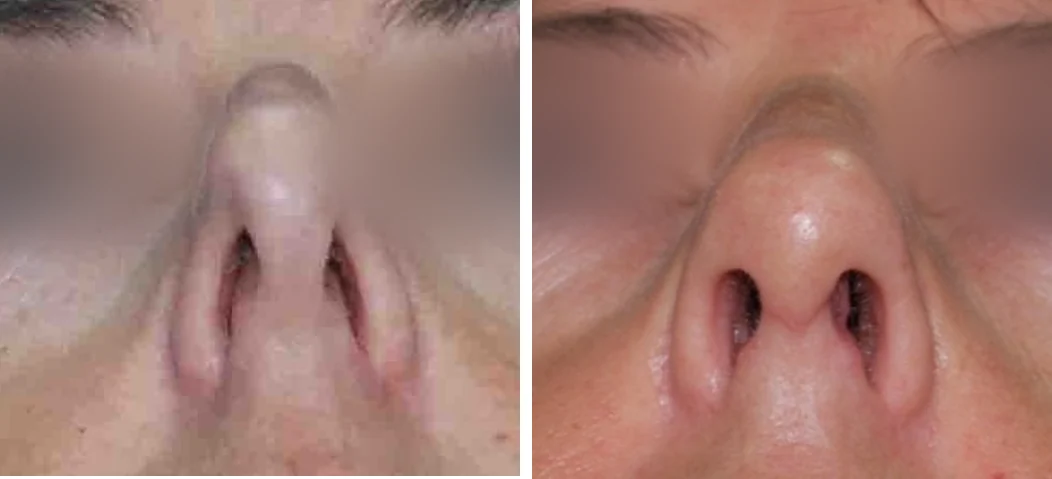
A case from Dr Sanjay's practice. A woman came with a blocked airway and pinched nostrils; she had become a mouth breather. Through an open tip rhinoplasty, Dr Sanjay used cartilage from her own septum as spreader grafts to open the internal and external nasal valves, improving her breathing through the nose.
Breathing and shape: before and after
Real patients of Dr Sanjay, photographed with the same lighting and angle before and 12 months after surgery. Published with written consent. Individual results vary.
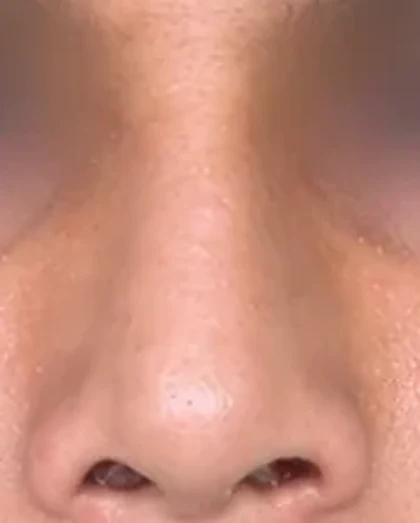
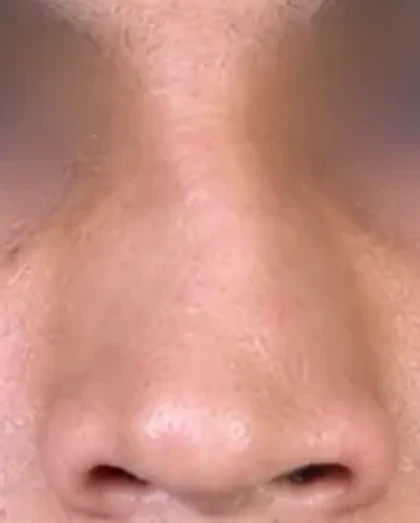
Case 1. Deviated nasal septum with a crooked nose and a blocked nostril
Septorhinoplasty · Front, side and base views
to confirm: breathing problems + shape cases 2–3 (problem, what was done, photo set)
Front and base views show the septum's effect on the nostrils; symptom scores show the breathing change. See more rhinoplasty results
Recovery: what to expect week by week
The nose feels blocked for the first 1–2 weeks while swelling settles; breathing improves progressively after that. Most people are back at a desk job in 7–10 days. Timings are typical, not guaranteed.
| When | What happens | What you can do |
|---|---|---|
| Day 1 | Nose feels blocked; mild pain controlled with tablets; splint on | Rest with head raised; usually home the next day |
| Days 2–5 | Swelling and bruising around the eyes peak, then fade | Short walks; no bending or lifting |
| Day 7 | Splint and any stitches removed | See your nose for the first time; still swollen |
| Days 10–14 | Most bruising gone | Back to work and social life |
| Weeks 3–4 | Swelling keeps falling | Light exercise |
| Week 6 | Bones are stable | Gym, swimming, glasses resting on the nose |
| Month 3 | About 80% of swelling gone | Nose looks natural to others |
| Month 12 | Tip swelling fully settled | Final result; review photos |
Specific to septorhinoplasty:
- The nose feels more blocked for the first 1–2 weeks while swelling and splints are in place
- Saline rinses keep the inside clean and reduce crusting
- Breathing improves progressively over the following weeks
Dubai-specific tips: avoid direct sun and the beach for 4–5 weeks, use SPF on the nose, and plan around Ramadan fasting and the summer heat. International patients: plan a minimum stay of 7–8 days in Dubai before flying home.
Risks, and how they are reduced
Every operation carries risk. These are the ones that matter most for this problem, and how they are reduced.
| Risk | What it means | How it is reduced |
|---|---|---|
| Persistent blockage | Breathing is better but not fully clear | Assessing all causes before surgery; treating allergy alongside |
| Septal perforation | A small hole in the septum | Careful technique; rare |
| Crusting and adhesions | Crusts or small scar bands inside the nose | Saline rinses and follow-up cleaning |
| Over-reduction of turbinates | Rarely, a dry nose that feels paradoxically blocked | Conservative turbinate reduction |
| Bleeding or infection | Uncommon; usually minor | Stop blood-thinning medicines and supplements before surgery; sterile, accredited theatre |
| Prolonged swelling | Especially with thick skin; the tip settles last | Taping, and steroid injections when needed |
| Numbness, scarring, asymmetry | Temporary tip numbness; a fine scar with the open approach; minor asymmetry | Explained at consultation |
| Breathing changes | Rarely, breathing feels worse | Assess the airway before surgery; keep or add support to the nasal valves |
| Need for revision | A second, usually smaller, operation | Realistic planning and staged follow-up |
| Anaesthesia risks | Rare in healthy patients | Pre-operative tests; certified anaesthetist |
Results vary between individuals and cannot be guaranteed. Smoking, some medicines and certain medical conditions increase risk.
How much does septorhinoplasty cost in Dubai?
The fee for septorhinoplasty depends on what needs to change, whether grafts are needed, and whether it is a first or revision operation. You receive a written, itemised quote after consultation.
What changes the price:
- Extent of septum, valve and turbinate work
- Cosmetic changes combined
- Whether grafts are needed
- Insurance contribution to the functional part
For context, rhinoplasty in Dubai generally ranges from about AED 15,000 to AED 65,000. Payment options are available on request.
Why choose Dr Sanjay Parashar in Dubai?
- Breathing assessed clinically and with a CT scan, with ENT colleagues for sinus and turbinate problems
- Airway and shape corrected in one operation, with one recovery
- 3,000+ rhinoplasties within more than 40,000 aesthetic procedures
- Practising in Dubai since 2005 — founder of Cocoona Centre for Aesthetic Transformation (Dubai 2009, New Delhi 2013)
- ISAPS National Secretary for the UAE (International Society of Aesthetic Plastic Surgery)
- Member of the Rhinoplasty Society of Europe
- Experience with many nose types: Arab, Persian, South Asian, African, East Asian and European
- Published papers, conference presentations and surgical workshops
- Languages: English, Hindi; Arabic via coordinator
Frequently asked questions
Will I breathe better straight away?
Do I need a CT scan?
Is septorhinoplasty covered by insurance?
Will my nose look different if I only want better breathing?
Will there be visible scars?
How painful is it, and when can I go back to work?
When can I fly home after surgery?
What is the right age for rhinoplasty?
How do I prepare for my consultation?
Related nose problems
Book your breathing consultation
Every nose is different. At your consultation Dr Sanjay examines the outside and inside of your nose, explains what is causing the breathing, and gives you a clear plan, cost and recovery timeline.
Cocoona Clinic · Lucia Clinic · Dubai London Hospital
References
- Stewart MG, Witsell DL, Smith TL, et al. Development and validation of the Nasal Obstruction Symptom Evaluation (NOSE) scale. Otolaryngol Head Neck Surg. 2004;130(2):157–163. doi:10.1016/j.otohns.2003.09.016
- Sheen JH. Spreader graft: a method of reconstructing the roof of the middle nasal vault following rhinoplasty. Plast Reconstr Surg. 1984;73(2):230–237. doi:10.1097/00006534-198402000-00013
- Rohrich RJ, Ahmad J. Rhinoplasty. Plast Reconstr Surg. 2011;128(2):49e–73e. doi:10.1097/PRS.0b013e31821e7191
- Parashar S, Venkataram A. Structured analysis of nose to achieve natural results in rhinoplasty. Otolaryngology (Sunnyvale). 2017;7(1):293. doi:10.4172/2161-119X.1000293