Quick answers
- When is revision considered?
- When a previous rhinoplasty has left over-reduction, a collapsed or pinched tip, asymmetry, a residual hump, a 'polly-beak' or breathing difficulty.
- Why wait a year?
- Swelling and scar tissue take about a year to mature. Operating earlier makes it hard to judge what truly needs correcting.
- Are grafts needed?
- Often. When septal cartilage was used or removed before, ear or rib cartilage may be needed to rebuild support.
Common problems corrected
- Over-resected (scooped) bridge
- Pinched or collapsed tip
- Residual hump or asymmetry
- Supratip fullness (polly-beak)
- Nasal valve collapse and breathing difficulty
- Visible irregularities
What to bring to consultation
- Operation notes from your previous surgery, if available
- Photos from before the first operation
- Any scans or ENT reports
Video
Before & after
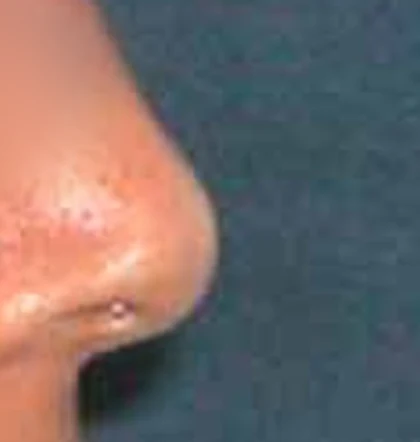
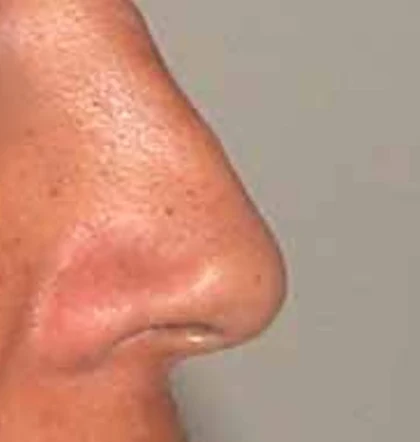
Revision: softer, more feminine nose — After two previous operations: bony bridge reduced, tip shortened and lifted.
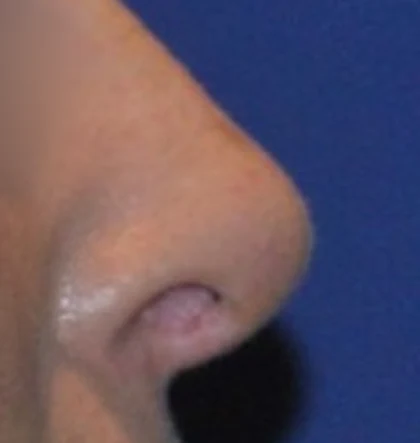
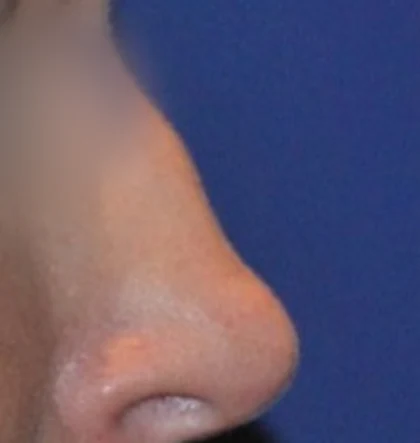
Revision: scooped nose — Over-removed cartilage replaced with grafts; tip adjusted.
Recovery
Most patients return to desk work in about 10–14 days. Swelling settles gradually over months, with the tip last. Timings are typical, not guaranteed. Healing varies with skin thickness, the extent of surgery, and whether it is a first or revision operation.
Risks and possible complications
Like any surgery, rhinoplasty carries risks. They are explained in detail at consultation and in writing before you consent.
- Swelling and bruising, which can take months to settle completely, especially at the tip
- Bleeding and nosebleeds, usually in the first days
- Infection
- Temporary or, rarely, lasting numbness of the nasal tip or upper teeth
- Asymmetry or an outcome that differs from what was planned
- Breathing difficulty, or a septal perforation (a hole in the septum)
- Visible or palpable irregularities, and scarring (open approach: a small scar across the columella)
- Risks of anaesthesia
- Need for further (revision) surgery — reported in roughly 5–15% of rhinoplasties
Results vary between individuals and cannot be guaranteed. Smoking, some medications and certain medical conditions increase risk.
Frequently asked
When is revision considered?
When a previous rhinoplasty has left over-reduction, a collapsed or pinched tip, asymmetry, a residual hump, a 'polly-beak' or breathing difficulty.
Why wait a year?
Swelling and scar tissue take about a year to mature. Operating earlier makes it hard to judge what truly needs correcting.
Are grafts needed?
Often. When septal cartilage was used or removed before, ear or rib cartilage may be needed to rebuild support.
How much does rhinoplasty cost in Dubai?
The fee depends on the complexity — primary or revision, whether septum or grafts are needed, and the facility. You receive a written, all-inclusive quote after consultation. See the Cost page for what affects the price.
Is rhinoplasty painful?
Most patients describe discomfort and a blocked feeling rather than sharp pain. It is usually well controlled with prescribed medication for the first few days.
Will there be a visible scar?
Closed rhinoplasty leaves no external scar. Open rhinoplasty leaves a small scar across the columella, which usually fades well. When the nostrils are narrowed, Dr Sanjay keeps the incisions inside the nostril where possible, so the scar is hidden.

Dr Sanjay ParasharConsultant Plastic Surgeon · DHA licence 00244892
Medically reviewed by Dr Sanjay Parashar · October 2026
Medically reviewed by Dr Sanjay Parashar · October 2026