 Draft for Dr Sanjay Parashar, Consultant Plastic Surgeon, Cocoona Centre for Aesthetic Transformation, Dubai · DHA licence 00244892
Revision rhinoplasty — also called secondary rhinoplasty — is surgery to correct the shape or breathing after a previous nose operation. Common reasons are a remaining hump, a bridge that was over-reduced, fullness above the tip, a pinched or asymmetric tip, a crooked nose, or worse breathing. Because of scar tissue and missing cartilage, it is more complex than a first operation and often needs grafts from the ear or rib. It is usually wise to wait about 12 months after the last operation.
Why do people consider revision?
When should revision be done?
Swelling and scar tissue take about a year to mature, longer with thick skin. Operating earlier makes it hard to know what truly needs correcting, and the tissues are less forgiving. Earlier surgery is considered only for clear functional problems. The time is used to document the result, collect the previous operation notes and plan.
Bring to your consultation: your previous operation notes (if available), photographs from before the first surgery, any scans, and a clear list of what bothers you most — in order.
What makes revision different
| Challenge | Why it matters | How it is managed |
|---|---|---|
| Scar tissue | Less stretch, more swelling, less visible definition | Careful dissection; realistic goals; steroid injections when needed |
| Missing septal cartilage | Less material for grafts | Ear or rib cartilage |
| Weakened support | The nose may have collapsed in places | Rebuilding support before refining shape |
| Emotional impact | Disappointment after a first operation is common | A thorough, honest consultation; sometimes a second opinion |
Is revision right for me? Questions to ask yourself
- Has it been at least 12 months since my last nose operation?
- Can I describe exactly what I would like changed — and what I would like kept?
- Is my breathing worse than before the first operation?
- Do I have my previous operation notes and 'before' photos?
Send us three photos — front, left side and right side — on WhatsApp for an initial opinion from Dr Sanjay.
Send 3 photos on WhatsApp+971 50 919 8203 · photos are seen only by the clinic teamWhat are my treatment options?
| Option | What it fixes | What it can't do | Recovery | How long it lasts |
|---|---|---|---|---|
| Minor (touch-up) revision | A small residual bump or edge; sometimes under local anaesthesia | Structural problems | About a week | Permanent |
| Structural revision rhinoplasty | Rebuilds support and reshapes bridge, tip and airway | Cannot fully reverse thick scarring or skin damage | 10–14 days social; 12–18 months final | Permanent |
| Filler camouflage | Can soften a small dip or asymmetry | Scarred tissue carries a higher risk of blocked blood vessels; temporary | Same day | Months |
How is revision rhinoplasty done?
- Review: previous notes, photographs and a CT scan if breathing is involved.
- Approach: usually open, to see and rebuild the altered framework.
- Graft source: septal cartilage if any remains; otherwise ear or rib cartilage.
- Support first: the septum and tip support are rebuilt before shape is refined.
- Bridge: a residual hump is smoothed or a scooped bridge rebuilt with grafts.
- Tip and nostrils: the tip is restructured; rim grafts correct lifted nostrils.
- Airway: valves and septum are corrected at the same time.
- Finish: stitches, taping and a splint for about a week.
In this teaching video, Dr Sanjay shows the careful dissection a revision needs. It contains surgical footage.
Revision rhinoplasty before and after
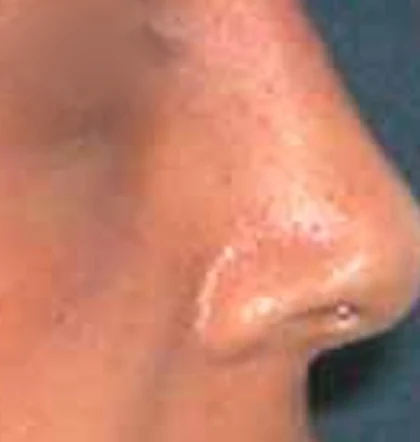
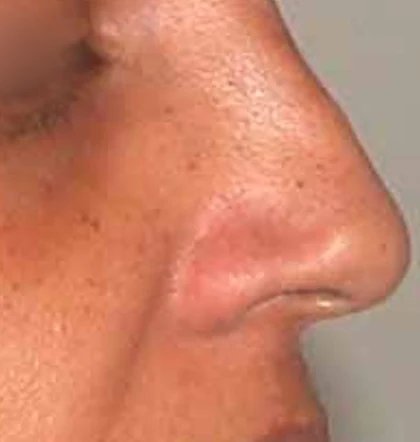
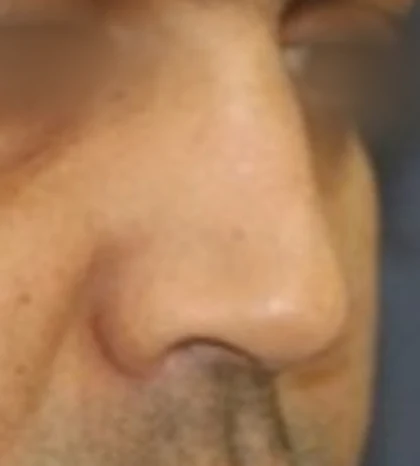
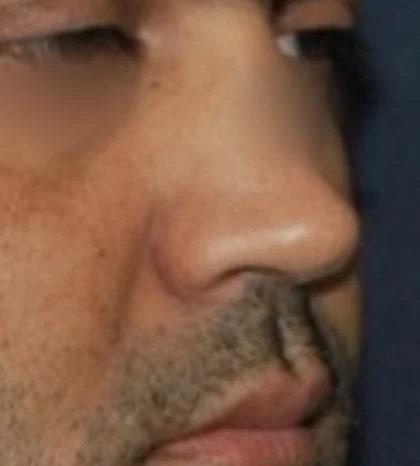
Real patients of Dr Sanjay, photographed with the same lighting and angle before and 12 months after surgery. Published with written consent. Individual results vary.
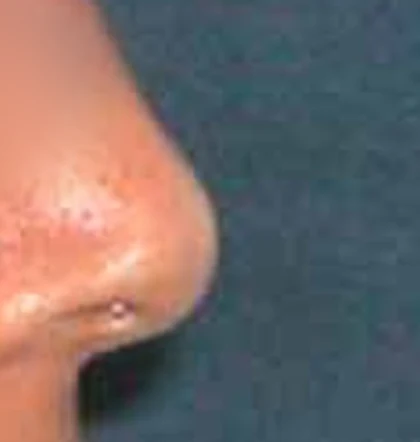
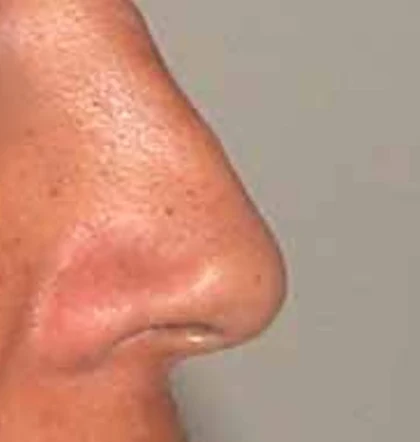
Case 1. Two previous rhinoplasties; she still felt her nose looked masculine, with a bony spur, and wanted a more feminine nose
Open tip rhinoplasty: bony bridge reduced, tip shortened and lifted · Both sides and front
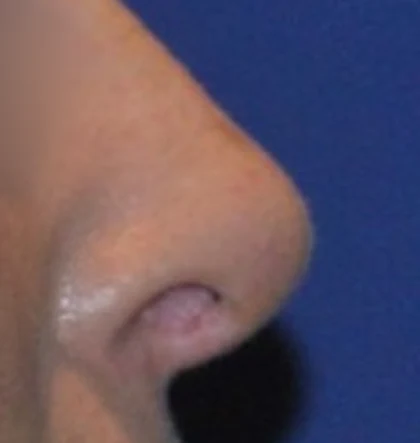
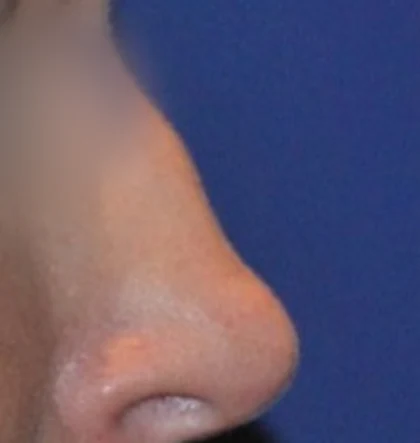
Case 2. A scooped nose after previous rhinoplasty, with too much cartilage removed
Open tip rhinoplasty with cartilage grafting and tip adjustment · Side and three-quarter views
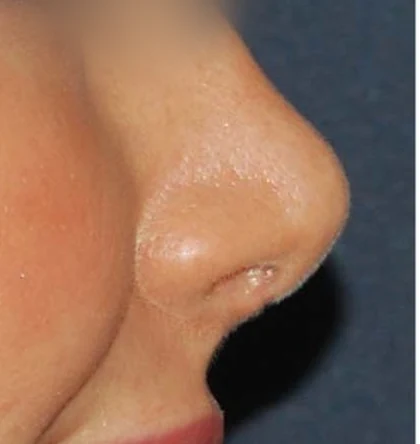
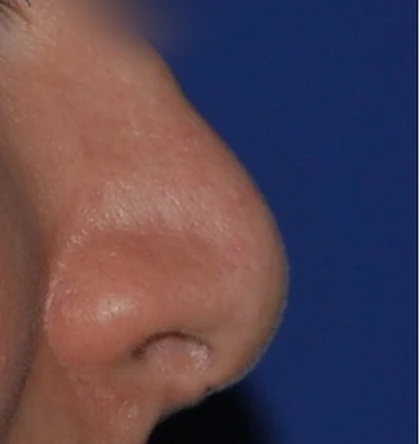
Case 3. Unhappy after rhinoplasty elsewhere: poor tip definition and projection, with an over-shortened nose
Open tip rhinoplasty with a costal (rib) cartilage graft to increase tip projection and support · Side, front and three-quarter views
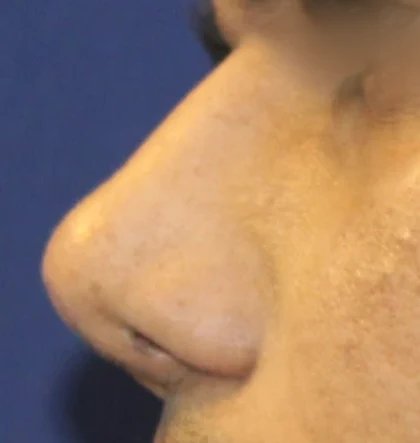
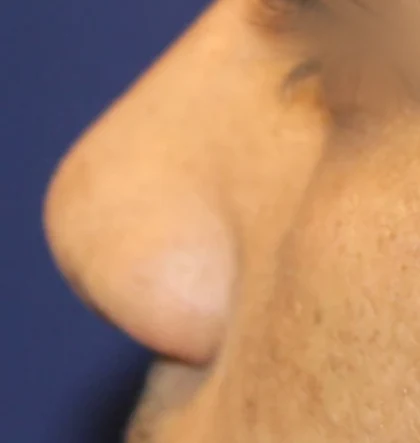
Case 4. Two previous rhinoplasties; poor tip definition and a broad, thick nose
Redo rhinoplasty: careful trimming of the soft tissue and narrowing of the columella · Side, front and base views
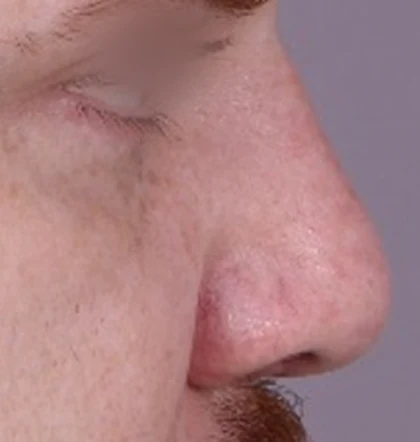
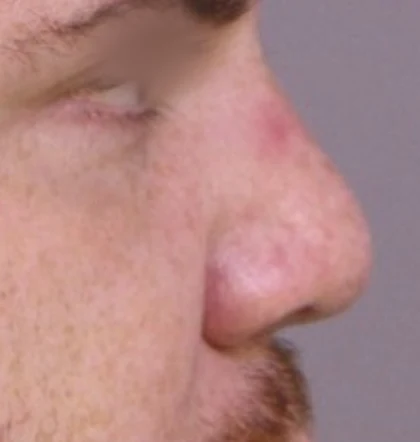
Case 5. Two previous rhinoplasties; still a chubby, broad and short nose
Open tip rhinoplasty with costal (rib) cartilage grafts to build up the bridge and increase tip projection; old scar on the tip removed · Side, front, downward and base views
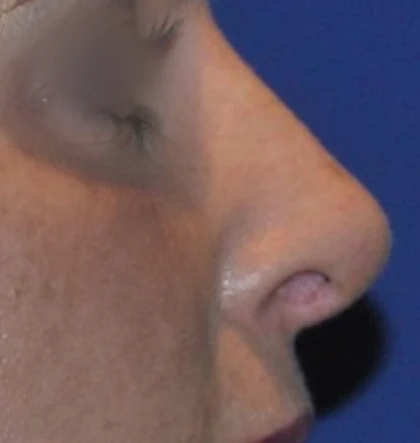
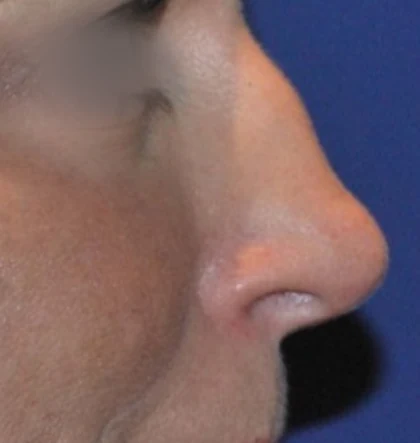
Case 6. Bump on the bridge and a drooping tip after previous surgery
Revision rhinoplasty · Side and three-quarter views
Case 7. Large nose with a hump after previous surgery
Revision rhinoplasty · Both sides and front view
Case 8. Heavy, drooping tip after previous surgery
Revision rhinoplasty · Three-quarter and front views
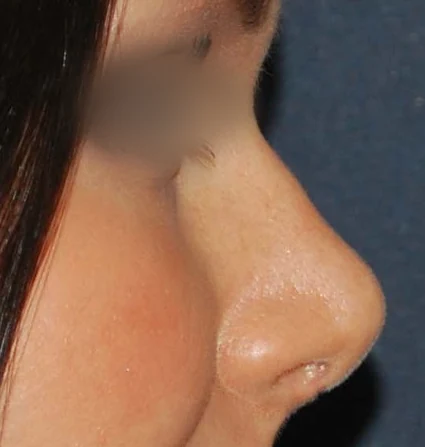
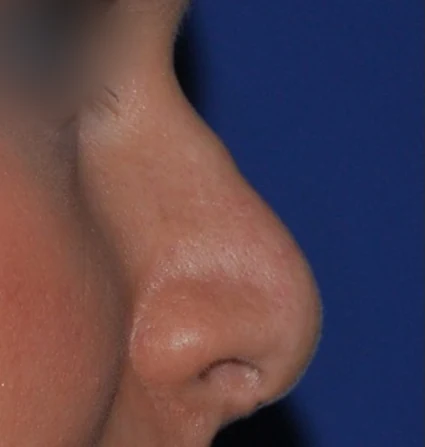
Case 9. Hump and a drooping, bulbous tip after previous surgery
Revision rhinoplasty · Side, front and three-quarter views
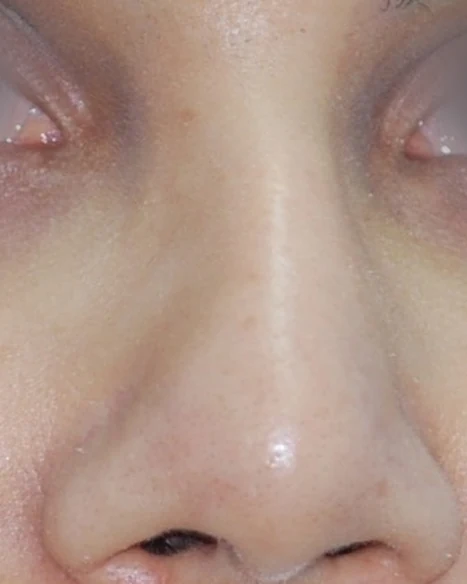
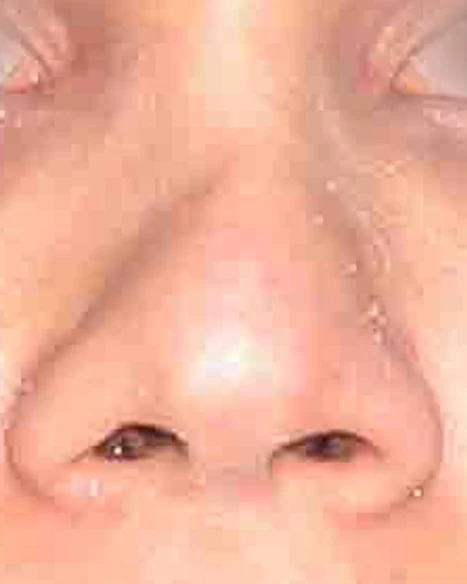
Case 10. Wide, bulbous tip and broad nostrils after previous surgery
Revision rhinoplasty · Front and base views
Side, front and base views together show what the revision corrected. See more rhinoplasty results
Recovery: what to expect week by week
Revision takes longer to settle than a first operation: most people are back at a desk job in 10–14 days, and the final result takes 12–18 months. Timings are typical, not guaranteed.
| When | What happens | What you can do |
|---|---|---|
| Day 1 | Nose feels blocked; mild pain controlled with tablets; splint on | Rest with head raised; usually home the next day |
| Days 2–5 | Swelling and bruising around the eyes peak, then fade | Short walks; no bending or lifting |
| Day 7 | Splint and any stitches removed | See your nose for the first time; still swollen |
| Days 10–14 | Most bruising gone | Back to work and social life |
| Weeks 3–4 | Swelling keeps falling | Light exercise |
| Week 6 | Bones are stable | Gym, swimming, glasses resting on the nose |
| Month 3 | About 80% of swelling gone | Nose looks natural to others |
| Month 12 | Tip swelling fully settled | Final result; review photos |
Specific to revision rhinoplasty:
- Scarred skin holds swelling longer — the final result takes 12–18 months
- If ear or rib cartilage is used, the donor site is sore for 1–2 weeks
Dubai-specific tips: avoid direct sun and the beach for 4–5 weeks, use SPF on the nose, and plan around Ramadan fasting and the summer heat. International patients: plan a minimum stay of 7–8 days in Dubai before flying home.
Risks, and how they are reduced
Revision rhinoplasty carries higher risks than a first operation. These are explained in detail before you decide.
| Risk | What it means | How it is reduced |
|---|---|---|
| Need for further surgery | Revision carries a higher chance of another operation than a first rhinoplasty | Thorough planning; rebuilding support; realistic goals |
| Prolonged swelling | Scarred skin holds swelling longer | Taping; steroid injections; patience |
| Graft problems | Warping, resorption or visibility of grafts | Careful carving; lamellar grafts wrapped in fascia where suitable |
| Donor-site problems | A chest or ear scar; rarely, chest complications from rib harvest | Experienced harvest technique |
| Bleeding or infection | Uncommon; usually minor | Stop blood-thinning medicines and supplements before surgery; sterile, accredited theatre |
| Prolonged swelling | Especially with thick skin; the tip settles last | Taping, and steroid injections when needed |
| Numbness, scarring, asymmetry | Temporary tip numbness; a fine scar with the open approach; minor asymmetry | Explained at consultation |
| Breathing changes | Rarely, breathing feels worse | Assess the airway before surgery; keep or add support to the nasal valves |
| Need for revision | A second, usually smaller, operation | Realistic planning and staged follow-up |
| Anaesthesia risks | Rare in healthy patients | Pre-operative tests; certified anaesthetist |
Results vary between individuals and cannot be guaranteed. Smoking, some medicines and certain medical conditions increase risk.
How much does revision rhinoplasty cost in Dubai?
The fee for revision rhinoplasty depends on what needs to change, whether grafts are needed, and whether it is a first or revision operation. You receive a written, itemised quote after consultation.
What changes the price:
- Extent of the correction
- Graft source: septum, ear or rib
- Breathing surgery
- Number of previous operations
For context, rhinoplasty in Dubai generally ranges from about AED 15,000 to AED 65,000. Payment options are available on request.
Why choose Dr Sanjay Parashar in Dubai?
- Revision planned from your previous operation notes and photographs
- Support rebuilt first with septal, ear or rib cartilage, then the shape refined
- 3,000+ rhinoplasties within more than 40,000 aesthetic procedures
- Practising in Dubai since 2005 — founder of Cocoona Centre for Aesthetic Transformation (Dubai 2009, New Delhi 2013)
- ISAPS National Secretary for the UAE (International Society of Aesthetic Plastic Surgery)
- Member of the Rhinoplasty Society of Europe
- Experience with many nose types: Arab, Persian, South Asian, African, East Asian and European
- Published papers, conference presentations and surgical workshops
- Languages: English, Hindi; Arabic via coordinator
Frequently asked questions
How long should I wait after my first rhinoplasty?
Why is revision more expensive and longer?
Will I need rib cartilage?
Can my original nose be restored?
Will there be visible scars?
How painful is it, and when can I go back to work?
When can I fly home after surgery?
What is the right age for rhinoplasty?
How do I prepare for my consultation?
Related nose problems
Book your revision consultation
Every nose is different. At your consultation Dr Sanjay examines the outside and inside of your nose, explains what is causing the revision, and gives you a clear plan, cost and recovery timeline.
Cocoona Clinic · Lucia Clinic · Dubai London Hospital
References
- Neaman KC, Boettcher AK, Do VH, et al. Cosmetic rhinoplasty: revision rates revisited. Aesthet Surg J. 2013;33(1):31–37. doi:10.1177/1090820X12469221
- Cuzalina A, Qaqish C. Revision rhinoplasty. Oral Maxillofac Surg Clin North Am. 2012;24(1):119–130. doi:10.1016/j.coms.2011.10.003
- Constantian MB. Four common anatomic variants that predispose to unfavorable rhinoplasty results: a study based on 150 consecutive secondary rhinoplasties. Plast Reconstr Surg. 2000;105(1):316–331. doi:10.1097/00006534-200001000-00051
- Parashar S, Venkataram A. Structured analysis of nose to achieve natural results in rhinoplasty. Otolaryngology (Sunnyvale). 2017;7(1):293. doi:10.4172/2161-119X.1000293