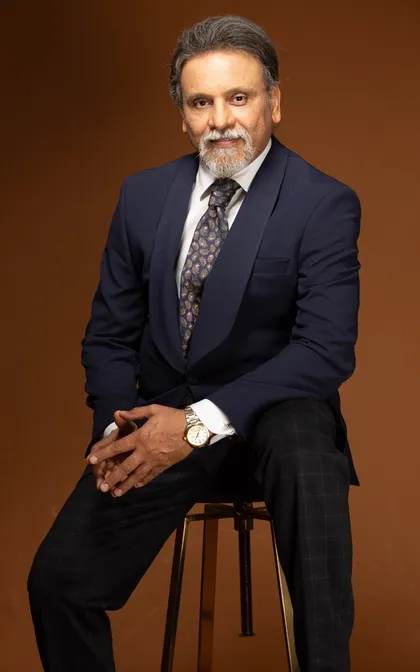
 Draft for Dr Sanjay Parashar, Consultant Plastic Surgeon, Cocoona Centre for Aesthetic Transformation, Dubai · DHA licence 00244892
A saddle nose has a dip in the middle of the bridge, like a horse's saddle, because the septum underneath has lost its strength. Causes include injury, a blood collection or infection in the septum, too much septum removed in an earlier operation, cocaine use, and some autoimmune conditions. The cause must be identified first. Repair rebuilds the septal support and restores the bridge, usually with cartilage from the ear or rib. It is a reconstructive operation of about 3–4 hours.
What is a saddle nose?
The septum holds up the middle of the nose like a tent pole. When it weakens or collapses, the bridge sinks, the tip can turn up and lose projection, and breathing often suffers. Saddle deformities range from a small dip to a severe collapse of both cartilage and bone.
What causes a saddle nose?
| Cause | What happens | What it means for treatment |
|---|---|---|
| Injury | The septum fractures or buckles | Reconstruction once healed |
| Septal haematoma or abscess | A blood collection or infection destroys septal cartilage | Reconstruction once fully healed |
| Previous septoplasty or rhinoplasty | Too much septum was removed | Revision reconstruction, often with rib cartilage |
| Cocaine use | Blood supply to the septum is damaged; a hole can form | Surgery is only considered after use has stopped completely |
| Autoimmune disease (e.g. granulomatosis with polyangiitis, relapsing polychondritis) | Inflammation destroys cartilage | Diagnosis and control with a rheumatologist first; surgery only in stable remission |
Why tests come first: if there is no clear injury or previous surgery, blood tests and sometimes a biopsy are arranged to rule out an inflammatory cause. Operating while the disease is active risks the reconstruction failing.
Could I have a saddle nose? A quick self-check
- In profile, there is a dip in the middle of your bridge
- Your tip has turned up or lost projection over time
- The change followed an injury, a nasal operation, or crusting and bleeding inside the nose
- Your breathing has become worse
Send us three photos — front, left side and right side — on WhatsApp for an initial opinion from Dr Sanjay.
Send 3 photos on WhatsApp+971 50 919 8203 · photos are seen only by the clinic teamWhat are my treatment options?
| Option | What it does | What it can't do | Recovery | How long it lasts |
|---|---|---|---|---|
| Reconstruction with cartilage | Rebuilds septal support and the bridge with ear or rib cartilage; improves breathing | Needs a donor site; longer operation | 10–14 days social; 12–18 months final | Permanent (grafts can change slightly) |
| Camouflage graft (minor saddle) | Fills a small dip with a thin (lamellar) cartilage graft or fascia | Does not restore lost support | 7–10 days | Permanent |
| Filler | Can soften a very small dip | Temporary; higher risk in scarred tissue; no support | Same day | Months |
How is a saddle nose repaired?
- Work-up: examination, imaging and — where needed — blood tests; any inflammatory disease must be stable first.
- Planning: how much support and height to rebuild, and the graft source.
- Approach: open, for access to rebuild the framework.
- Harvest: rib cartilage is taken for larger repairs, ear cartilage for smaller ones.
- Rebuilding support: a new septal strut restores the central support of the nose.
- Bridge: the dip is filled with carved, layered (lamellar) cartilage grafts, wrapped in fascia if needed.
- Tip: projection and length are restored with support grafts.
- Finish: stitches, taping and a splint for about a week.
Saddle nose before and after
Case 1 (planned). Saddle deformity after a previous septoplasty
Rib cartilage septal reconstruction, lamellar cartilage dorsal graft · Side + front view
to confirm: saddle nose cases 2–3 (problem, what was done, photo set)
The side view shows a saddle deformity most clearly. See more rhinoplasty results
Recovery: what to expect week by week
Most people are back at a desk job in 10–14 days. If rib cartilage is used, the chest is sore for a week or two. The final result takes 12–18 months. Timings are typical, not guaranteed.
| When | What happens | What you can do |
|---|---|---|
| Day 1 | Nose feels blocked; mild pain controlled with tablets; splint on | Rest with head raised; usually home the next day |
| Days 2–5 | Swelling and bruising around the eyes peak, then fade | Short walks; no bending or lifting |
| Day 7 | Splint and any stitches removed | See your nose for the first time; still swollen |
| Days 10–14 | Most bruising gone | Back to work and social life |
| Weeks 3–4 | Swelling keeps falling | Light exercise |
| Week 6 | Bones are stable | Gym, swimming, glasses resting on the nose |
| Month 3 | About 80% of swelling gone | Nose looks natural to others |
| Month 12 | Tip swelling fully settled | Final result; review photos |
Specific to saddle nose repair:
- If rib cartilage is used, the chest is sore for 1–2 weeks
- Grafts settle over 12–18 months before the final shape is seen
- Any autoimmune condition continues to be followed by your rheumatologist
Dubai-specific tips: avoid direct sun and the beach for 4–5 weeks, use SPF on the nose, and plan around Ramadan fasting and the summer heat. International patients: plan a minimum stay of 7–8 days in Dubai before flying home.
Risks, and how they are reduced
Saddle nose repair is reconstructive surgery, and its risks are higher than for a first cosmetic rhinoplasty.
| Risk | What it means | How it is reduced |
|---|---|---|
| Graft warping or resorption | The rebuilt bridge changes shape slightly over time | Careful carving of lamellar grafts; fascia wrapping; follow-up |
| Disease recurrence | An autoimmune condition flares and affects the repair | Surgery only in stable remission, with the rheumatologist |
| Donor-site problems | A chest or ear scar; rarely, chest complications from rib harvest | Experienced harvest technique |
| Septal perforation | A hole in the septum, or an existing one persisting | Careful technique; repair when feasible |
| Bleeding or infection | Uncommon; usually minor | Stop blood-thinning medicines and supplements before surgery; sterile, accredited theatre |
| Prolonged swelling | Especially with thick skin; the tip settles last | Taping, and steroid injections when needed |
| Numbness, scarring, asymmetry | Temporary tip numbness; a fine scar with the open approach; minor asymmetry | Explained at consultation |
| Breathing changes | Rarely, breathing feels worse | Assess the airway before surgery; keep or add support to the nasal valves |
| Need for revision | A second, usually smaller, operation | Realistic planning and staged follow-up |
| Anaesthesia risks | Rare in healthy patients | Pre-operative tests; certified anaesthetist |
Results vary between individuals and cannot be guaranteed. Smoking, some medicines and certain medical conditions increase risk.
How much does saddle nose repair cost in Dubai?
The fee for saddle nose repair depends on what needs to change, whether grafts are needed, and whether it is a first or revision operation. You receive a written, itemised quote after consultation.
What changes the price:
- Severity of the deformity
- Rib or ear cartilage
- Whether breathing surgery is combined
- Previous operations
For context, rhinoplasty in Dubai generally ranges from about AED 15,000 to AED 65,000. Payment options are available on request.
Why choose Dr Sanjay Parashar in Dubai?
- Reconstruction planned only after the cause is identified and any disease is in remission
- Experience rebuilding septal support with rib and lamellar cartilage grafts
- 3,000+ rhinoplasties within more than 40,000 aesthetic procedures
- Practising in Dubai since 2005 — founder of Cocoona Centre for Aesthetic Transformation (Dubai 2009, New Delhi 2013)
- ISAPS National Secretary for the UAE (International Society of Aesthetic Plastic Surgery)
- Member of the Rhinoplasty Society of Europe
- Experience with many nose types: Arab, Persian, South Asian, African, East Asian and European
- Published papers, conference presentations and surgical workshops
- Languages: English, Hindi; Arabic via coordinator
Frequently asked questions
Why do I need blood tests before surgery?
Do I need rib cartilage?
Will my breathing improve?
I used cocaine in the past — can I have surgery?
Will there be visible scars?
How painful is it, and when can I go back to work?
When can I fly home after surgery?
What is the right age for rhinoplasty?
How do I prepare for my consultation?
Related nose problems
Book your saddle nose consultation
Every nose is different. At your consultation Dr Sanjay examines the outside and inside of your nose, explains what is causing the saddle nose, and gives you a clear plan, cost and recovery timeline.
Cocoona Clinic · Lucia Clinic · Dubai London Hospital
References
- Daniel RK. Rhinoplasty: septal saddle nose deformity and composite reconstruction. Plast Reconstr Surg. 2007;119(3):1029–1043. doi:10.1097/01.prs.0000252503.30804.5e
- Ban A, Crowe A, Tudor K. Saddle nose deformity and granulomatosis with polyangiitis. QJM. 2018;111(1):55. doi:10.1093/qjmed/hcx182
- Parashar S, Venkataram A. Structured analysis of nose to achieve natural results in rhinoplasty. Otolaryngology (Sunnyvale). 2017;7(1):293. doi:10.4172/2161-119X.1000293