Quick answers
- What is rhinoplasty?
- Surgery that changes the shape, size or angle of the nose. It can reduce a hump, refine the tip, narrow or build up the bridge, straighten a crooked nose and improve breathing.
- Who is a good candidate?
- Healthy adults (and teenagers once the nose has finished growing — usually from about 16–17 for girls and 17–18 for boys) with realistic expectations, who are asking for the change themselves.
- Open or closed?
- Closed rhinoplasty uses incisions inside the nose only. Open rhinoplasty adds a small incision across the columella for direct access to the tip. The choice depends on what needs to change — it is made with you at consultation.
What can be changed
- Dorsal hump — lowering and smoothing the bridge
- Tip — width, definition, projection and rotation
- Bridge width — narrowing wide nasal bones
- Low bridge — building height with your own cartilage
- Nostrils — reducing flare or width
- Symmetry — straightening a deviated nose
- Breathing — septum and nasal valve correction
How the operation is done
Under general anaesthesia, the skin is lifted off the framework through open or closed incisions. Bone and cartilage are reduced, re-positioned or reinforced with grafts — usually from the septum. The skin is re-draped, an external splint is applied and, if needed, soft internal splints.
Techniques
- Open (external) rhinoplasty
- Closed (endonasal) rhinoplasty
- Cartilage grafting — septal, ear or rib cartilage
- Osteotomies to narrow or straighten the bones
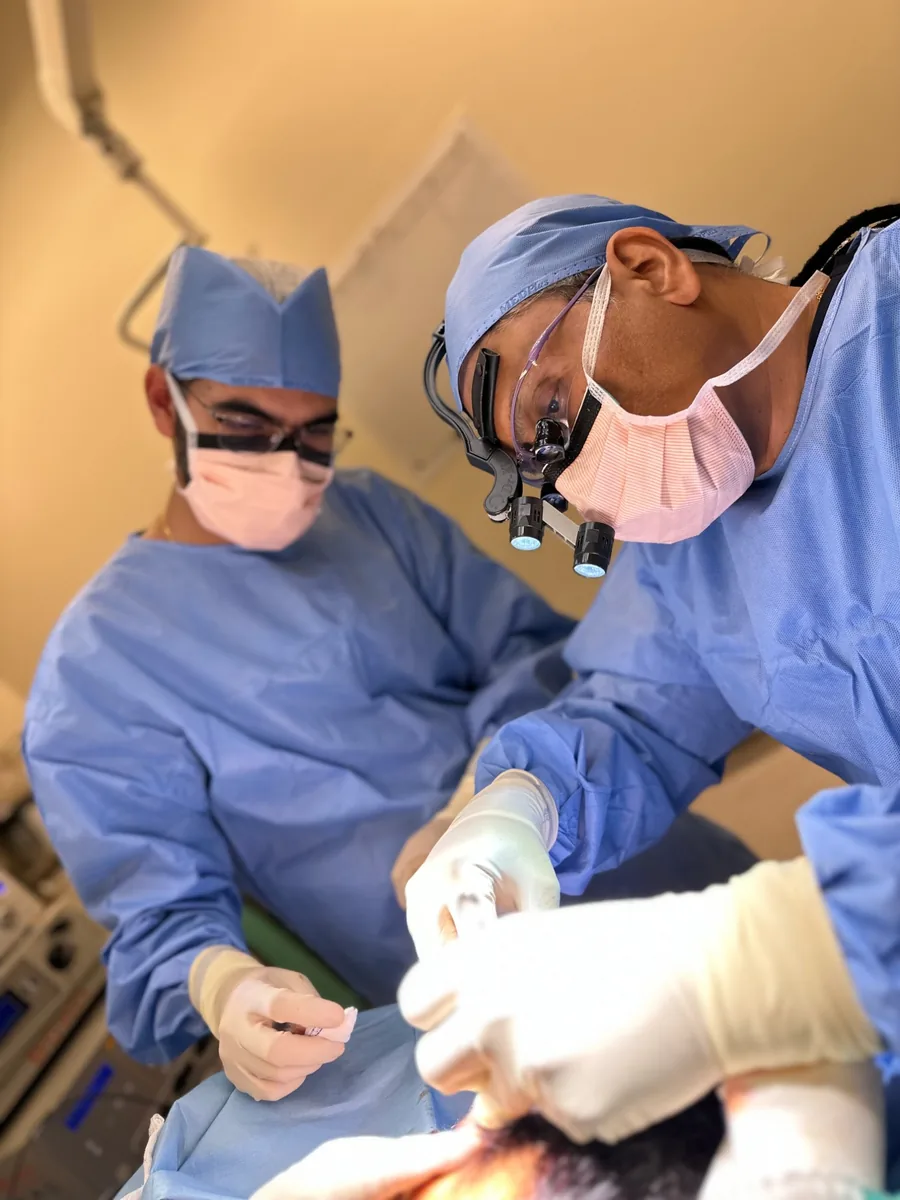
Video
Before & after
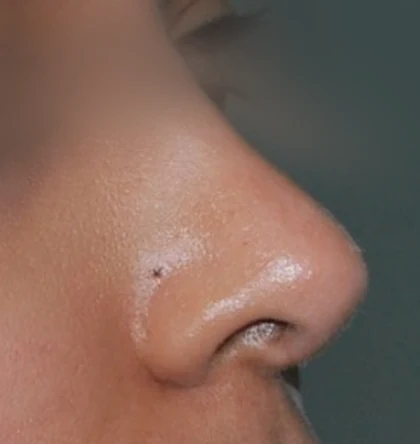
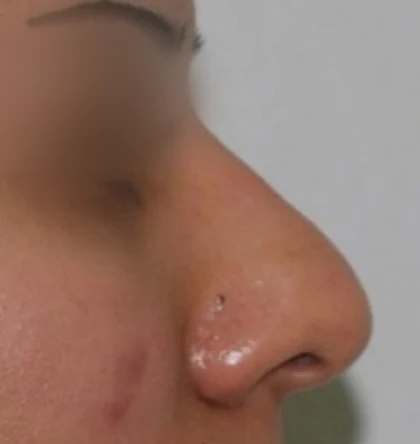
Hump and drooping tip — Profile straightened and tip lifted; side and front views.
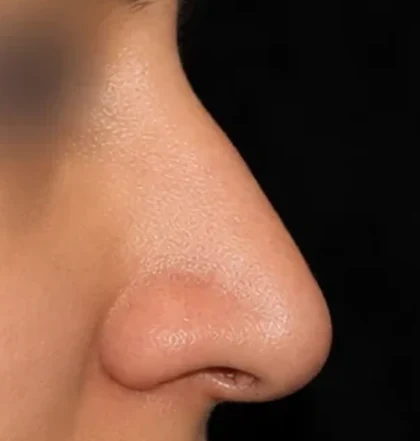
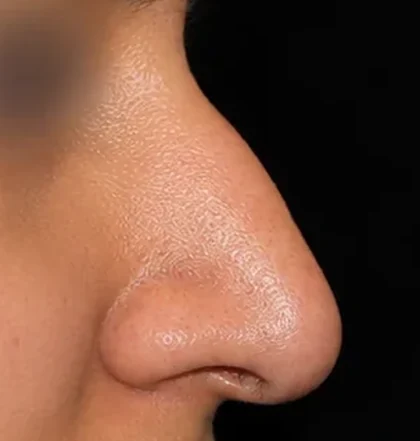
Dorsal hump reduction — Hump lowered, bridge smoothed.
Recovery
Most patients return to desk work in about 7–10 days. Swelling settles gradually over months, with the tip last. Timings are typical, not guaranteed. Healing varies with skin thickness, the extent of surgery, and whether it is a first or revision operation.
Risks and possible complications
Like any surgery, rhinoplasty carries risks. They are explained in detail at consultation and in writing before you consent.
- Swelling and bruising, which can take months to settle completely, especially at the tip
- Bleeding and nosebleeds, usually in the first days
- Infection
- Temporary or, rarely, lasting numbness of the nasal tip or upper teeth
- Asymmetry or an outcome that differs from what was planned
- Breathing difficulty, or a septal perforation (a hole in the septum)
- Visible or palpable irregularities, and scarring (open approach: a small scar across the columella)
- Risks of anaesthesia
- Need for further (revision) surgery — reported in roughly 5–15% of rhinoplasties
Results vary between individuals and cannot be guaranteed. Smoking, some medications and certain medical conditions increase risk.
Frequently asked
What is rhinoplasty?
Who is a good candidate?
Open or closed?
How much does rhinoplasty cost in Dubai?
Is rhinoplasty painful?
Will there be a visible scar?

Medically reviewed by Dr Sanjay Parashar · October 2026